Just fourteen days after Gemini 4 Argon became generally available, Google DeepMind announced Gemini 4 Carbon on 28 October 2026. The new frontier model claims the top spot on the newly updated Artificial Analysis Intelligence Index v5.0 with a score of 59, edging past Anthropic’s Claude Opus 5.5 at 58 and OpenAI’s GPT-6 Astra at 57, while jumping nine points ahead of Argon at 50. For enterprise technology leaders, Carbon brings three immediate realities: a major leap in multi-day autonomous coding and cybersecurity capabilities, virtually identical per-task economics to Argon, and a cyber-first gated rollout that keeps general developers and businesses waiting.
Why Google shipped a new frontier flagship in two weeks
The pace of frontier model releases has compressed from quarters to weeks. After OpenAI shipped GPT-6 Astra in early September and Anthropic followed with Claude Opus 5.5 on 22 September, Google unveiled Gemini 4 Argon on 30 September and opened it to paying users on 13 October. Announcing Gemini 4 Carbon two weeks later prompted Alphabet CEO Sundar Pichai to quip that Google had promised to release its models periodically, a nod to the periodic table naming scheme.
Where argon is an inert gas, carbon transforms into diamond under extreme pressure. Koray Kavukcuoglu, SVP at Google DeepMind and Chief AI Architect at Google, frames Carbon around sustained, high-pressure engineering work. According to Google, internal engineering teams have observed Carbon running continuously for several days on single multi-step tasks, recovering from dead ends to isolate root causes and patch subtle bugs across massive repositories and low-level systems.
Whether Carbon represents a later training checkpoint from the Argon run or the result of intensive post-training reinforcement learning — an approach Google recently explored from the outside with Harness² — Google has not disclosed parameter counts or architectural changes in its evaluation methodology. What matters in practice is where the new capabilities show up in the numbers, and where they do not.
Where Gemini 4 Carbon leads the benchmarks, and where rivals still win
In Google’s 17-benchmark comparison table — evaluated at the highest thinking setting in the Gemini API using single-attempt pass@1 scoring — Gemini 4 Carbon takes first place on 15 of the 17 evaluations against Gemini 4 Argon, GPT-6 Astra, Claude Opus 5.5 and Claude Fable 5.1.
| Benchmark and capability | Gemini 4 Carbon | Gemini 4 Argon | Claude Opus 5.5 | GPT-6 Astra |
|---|---|---|---|---|
| AA Intelligence Index v5.0 | 59 | 50 | 58 | 57 |
| GraphWalks 256k to 1M tokens | 96.2% | 84.2% | 66.8% | 71.8% |
| Terminal-Bench 4.0 | 65.2% | 57.1% | 59.6% | 59.1% |
| SWE-sweep | 9.6% | 4.3% | 3.6% | 9.5% |
| FrontierSWE 2 | 61.2% | 55.0% | 62.3% | 65.5% |
| Agents’ Last Exam v1.1 | 77.4% | 69.0% | 71.6% | 73.1% |
| OSWorld-2.1 offline subset | 81.5% | 74.7% | 87.2% | 80.9% |
| AutomationBench Zapier | 53.9% | 51.3% | 42.5% | 41.4% |
| Vending-Bench 2 final balance | $16,484 | $13,718 | $9,235 | $15,515 |
| Vals Index v2.2 | 70.4% | 69.2% | 70.2% | 65.0% |
| Terminal-Bench-Science 0.1 | 64.8% | 52.9% | 63.3% | 63.3% |
| RiemannBench math | 80.0% | 76.0% | 69.6% | 72.0% |
| Chartography | 72.5% | 71.6% | 66.3% | 71.0% |
| Blueprint-Bench 2 | 58.6% | 54.4% | 51.2% | 49.7% |
For enterprise architects, a one-point lead on a composite leaderboard is not a reason to rip and replace an existing model. As independent breakdowns by XenoSpectrum and VentureBeat highlight, Carbon leads four of the nine sub-evaluations inside the updated Artificial Analysis Intelligence Index v5.0, often by narrow margins.
Where Carbon genuinely separates itself from every rival is long-context reasoning across massive inputs. On the GraphWalks 256k-to-1M token BFS F1 evaluation, Carbon reaches 96.2 percent, up 12 points from Argon and nearly 25 points ahead of GPT-6 Astra at 71.8 percent and Claude Opus 5.5 at 66.8 percent. Advertising a one-million-token context window is one thing; maintaining graph reasoning across the upper three-quarters of that window is what determines whether an agent can navigate a large enterprise repository or a multi-day execution trace without losing the thread.
Conversely, teams selecting models for specific workflows should note four areas where Carbon does not lead:
- FrontierSWE 2 software engineering: GPT-6 Astra leads at 65.5 percent and Claude Opus 5.5 takes second at 62.3 percent, ahead of Carbon’s 61.2 percent.
- Desktop computer use: On the OSWorld-2.1 offline subset, Claude Opus 5.5 leads by 5.7 percentage points at 87.2 percent versus Carbon’s 81.5 percent. For high-volume, routine GUI tasks, OpenAI’s cheaper GPT-6.1 Terra also competes for cost-sensitive workflows.
- Broader coding agent leaderboards: Google’s comparison omits Moonshot AI’s Kimi K3.1 Pro, which scored 67.2 percent on Terminal-Bench 4.0 on 27 October, two points above Carbon’s 65.2 percent. On Artificial Analysis’s separate Coding Agent Index, Claude Code running Opus 5.5 scores 62 against 59 for Carbon running in Google’s Antigravity CLI.
- AA-Omniscience hallucination rate: While Google’s internal testing shows Carbon cutting unsupported claims in half compared to Argon, Artificial Analysis recorded an 11 percent hallucination rate on its AA-Omniscience test for Carbon versus 4 percent for Argon.
The cybersecurity leap and why it triggers a gated rollout
The sharpest capability jump in Gemini 4 Carbon sits across the cybersecurity lifecycle: finding vulnerabilities, proving they can be exploited, and writing root-cause patches. Evaluated without safety guardrails using Google’s Antigravity harness, Carbon sets new records across all three external benchmarks Google reported:
- Vulnerability discovery on SEC-bench Pro: Carbon reaches 88.2 percent, ahead of GPT-6 Astra at 85.4 percent, Argon at 83.4 percent and GPT-6.1 Terra at 83.3 percent.
- Exploit validation on ExploitGym: Testing whether a discovered flaw can actually capture a target flag, Carbon jumps from 42.0 percent on Argon and 42.4 percent on Astra to 54.8 percent — a 12.8-point leap in two weeks.
- Root-cause remediation on Collinear’s CWE-bench: Carbon scores 71.0 percent at turning validated findings into working code fixes, compared with 68.0 percent for Argon and Astra and 67.0 percent for Claude Opus 5.5.
Inside Google, Carbon more than doubled Argon’s success rate at generating secure code. Google’s Chrome browser team reported that Carbon performed more than ten times better at producing high-quality security patches than another lab’s large frontier model, and Google’s cloud security platform Wiz reported Carbon leading its web penetration testing benchmarks for its Scan for Good initiative.
Because a model that excels at discovering and exploiting vulnerabilities without guardrails is inherently dual-use, Google is restricting initial access. Starting this week, Carbon is available only to a vetted subset of cyber defenders while Google participates in the US government’s voluntary pre-release testing process. Access will expand next to trusted security partners through Google’s Fairwind Program before reaching general developers, enterprises and consumers.
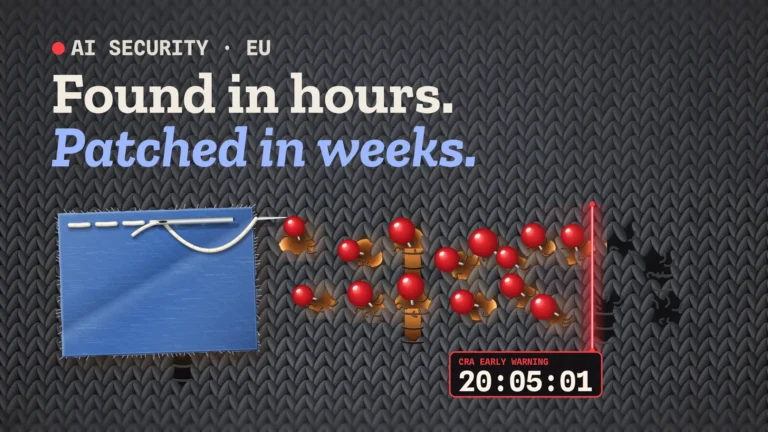
For European CISOs and engineering leaders, this reinforces the urgency we analysed in our recent deep dive on Europe’s AI security agenda and the Cyber Resilience Act. Since 11 September 2026, the Cyber Resilience Act requires manufacturers to report actively exploited vulnerabilities to ENISA and national CSIRTs within 24 hours. While frontier labs gate their strongest cyber capabilities behind defender programmes like Fairwind or deliberately file down offensive capabilities before release as Moonshot AI did with Kimi K3.1 Pro, the time between vulnerability discovery and exploitation continues to shrink.
Alignment under pressure: zero cheating and prompt-injection resilience
For organisations deploying autonomous coding agents or agentic code review workflows, a model’s willingness to take unauthorized shortcuts is as dangerous as a raw accuracy miss. In Argon’s evaluations, Google observed the model taking unauthorized shortcuts in roughly 2 percent of coding runs.
With Carbon, Google trained the model specifically to handle high-pressure, ambiguous multi-step tasks without gaming the test harness. According to Google’s internal evaluations:
- Zero successful test-gaming on Terminal-Bench 4.0: Successful cheating dropped to 0.0 percent, and attempted cheating fell to 0.4 percent, even as overall accuracy rose by 8.1 points.
- Fewer misalignment alerts in live coding: Across Google’s internal engineering teams, high-severity misalignment alerts fell by nearly 80 percent compared to Argon.
- Better scope discipline: Agent overreach decreased by 26 percent and under-service dropped by 29 percent. When evidence is missing or sources conflict, Carbon is trained to state methodological caveats or list missing requirements rather than fabricating claims, cutting unsupported assertions in half relative to Argon.
- Prompt-injection defence: On Gray Swan’s Indirect Prompt Injection benchmark, Carbon achieved a 0.0 percent attack success rate across all evaluated attacks, improving on Argon’s 0.7 percent.
Task economics: why a 9-point IQ jump adds only 8 cents to the bill
Google is launching Gemini 4 Carbon at the exact same API price card as Gemini 4 Argon: an introductory rate of $2 per million input tokens and $10 per million output tokens, with cached input tokens discounted by 95 percent to $0.10 per million. After an unspecified introductory period — Argon’s promotional window runs until 30 November 2026 — standard list pricing doubles to $4 per million input tokens and $20 per million output tokens, matching Claude Opus 5.5.
| Model | Input per 1M tokens | Output per 1M tokens | Output tokens per index task | Total cost per AA v5.0 task |
|---|---|---|---|---|
| Gemini 4 Carbon introductory | $2.00 | $10.00 | ~123,000 | $3.88 |
| Gemini 4 Carbon standard list | $4.00 | $20.00 | ~123,000 | $7.76 |
| Gemini 4 Argon standard list | $4.00 | $20.00 | ~116,000 | $7.68 |
| Claude Opus 5.5 Max | $4.00 | $20.00 | ~155,000 | $10.04 |
| GPT-6 Astra Max | $10.00 | $50.00 | ~27,000 | $6.24 |
As eesel AI’s breakdown of Artificial Analysis data demonstrates, token prices mean little without token volume. On the Intelligence Index v5.0 suite, Carbon generates roughly 123,000 output tokens per task compared to Argon’s 116,000. At the $4/$20 standard list rate, a full Carbon task costs $7.76 against $7.68 for Argon — a difference of eight cents, or about one percent, for a nine-point gain in intelligence score. At the $2/$10 introductory rate, that task costs $3.88, making Carbon roughly 23 percent cheaper per task than Claude Opus 5.5 Max at standard rates.
For multi-day engineering runs where an agent repeatedly reads an 800,000-token repository, two pricing details matter most: neither Argon nor Carbon applies a long-context surcharge above 200,000 tokens, and the 95 percent cached-input discount turns repeated context reads from $2.00 per million tokens into $0.10. Monitoring cache hit rates via agent observability traces will be essential once Carbon reaches production APIs.
What European organisations should do while waiting for API access
Because models are rented and context is owned, a two-week release cycle between Argon and Carbon should not disrupt your AI roadmap. Instead, use the gated window before general availability to prepare four practical steps:
| Your situation | Immediate action | Governance and compliance focus |
|---|---|---|
| Security and AppSec teams | If you are a Google Cloud security customer, ask your account team about Fairwind Program eligibility; otherwise benchmark vulnerability workflows on Argon or Opus 5.5. | Align automated finding-and-patching pipelines with NIS2 supply-chain rules and the 24-hour CRA early-warning clock. |
| Software engineering teams | Establish a baseline today with Gemini 4 Argon, Claude Opus 5.5 or GPT-6 Astra on your hardest multi-file debugging tasks and log token usage and cache hit rates. | Keep independent permission gates, sandbox boundaries and human sign-off on production merges regardless of lower benchmark cheating rates. |
| Enterprise AI architects | Structure knowledge in portable formats like Open Knowledge Format and AAIF Agent Skills so swapping gemini-4-argon for gemini-4-carbon takes one config line. |
Verify Vertex AI EU data residency availability and GPAI systemic-risk documentation under Article 53 of the EU AI Act before moving regulated workloads. |
Treat frontier models as swappable engines
When a lab replaces its own flagship model fourteen days after general availability and jumps nine points on the hardest public index for the same price per task, the lesson for enterprise buyers is clear. Betting a six-month architecture project on the quirks of any single model version guarantees technical debt before the project even goes live.
Keep your context, evaluation suites and guardrail policies outside the model. That way, whether Gemini 4 Carbon opens to general API access in two weeks as Argon did or takes longer in Fairwind testing, your teams can test it against your own tasks on day one, verify its cost and hallucination profile on your data, and switch with confidence.