Hermes Agent targets a specific problem in the AI agent stack. Most assistants still operate as session tools. You open them, feed context, finish the task, and lose part of that context in the next session. Hermes Agent, built by Nous Research, takes the opposite route. It runs as a long lived agent runtime with persistent memory, autonomous skill creation, scheduled automations, cross channel messaging and a built in learning loop.
That design puts Hermes Agent in direct comparison with OpenClaw, the better known open source project in the same category. The two overlap on model flexibility, messaging interfaces and self hosting. They diverge on architecture. OpenClaw prioritizes ecosystem breadth. Hermes prioritizes learning depth, memory quality and tighter operational controls. That difference matters more than a simple feature checklist.
What Hermes Agent is
Nous Research describes Hermes Agent as a self improving AI agent that grows with you. In practical terms, it is an agent framework you can run on a $5 VPS, a GPU cluster or serverless infrastructure with near zero idle cost. It is not tied to a laptop or a browser tab. You can interact with it through a terminal interface or through messaging platforms including Telegram, Discord, Slack, WhatsApp, Signal and Email.
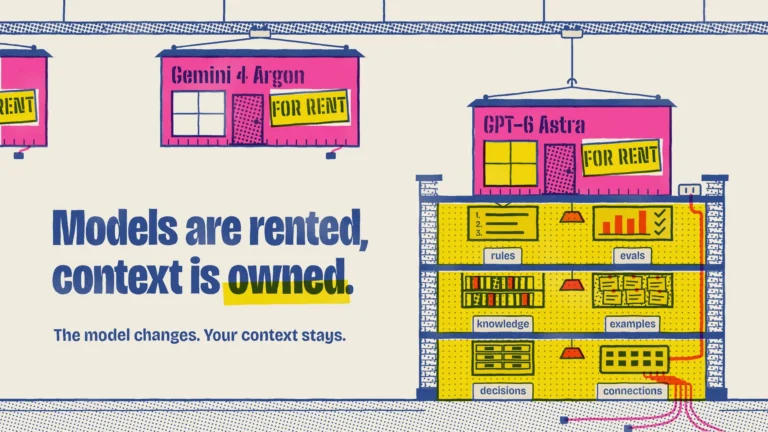
Hermes Agent supports multiple model providers. The project states that you can use Nous Portal, OpenRouter with 200+ models, Xiaomi MiMo, z.ai, Kimi from Moonshot, MiniMax or your own endpoint. That removes direct model lock in and lets operators switch models without code changes.
The interface layer is broader than a simple chatbot wrapper. Hermes includes a terminal UI with multiline editing, slash command autocomplete, conversation history, interrupt and redirect controls and streaming tool output. It also runs a single gateway process for messaging channels, which keeps conversations continuous across devices and apps.
The core idea behind Hermes Agent
The central claim around Hermes Agent is its closed learning loop. That loop combines four elements.
- Persistent memory that the agent curates across sessions
- Search over prior sessions using SQLite FTS5 and LLM summarization
- Autonomous skill creation after complex tasks
- Skill improvement during use as tasks repeat and procedures evolve
This shifts the agent from session recall to procedural learning. Instead of asking the model to solve each task from scratch, Hermes can convert a solved workflow into a reusable skill. The next time a similar task appears, the agent can load that skill, apply prior steps and refine it. Nous also positions the system around the agentskills.io open standard, which matters for skill portability.
That architecture aligns with a broader trend in AI systems. According to the Stanford HAI AI Index 2026, AI agents moved from question answering toward task completion in 2025, but they still fail roughly one in three attempts on structured benchmarks. On OSWorld, agent accuracy rose from roughly 12% to 66.3%, within 6 percentage points of human performance. In that environment, the value no longer comes only from raw model intelligence. It comes from memory, workflow recovery, tool orchestration and repeatability. Hermes is built around that layer.
Why Hermes Agent is better than OpenClaw in key areas
1. Hermes has a stronger memory architecture
OpenClaw proved that developers want persistent agents. Hermes goes further on how persistence works. It uses FTS5 full text search across past sessions, adds LLM summarization and maintains agent curated memory with periodic nudges. That matters because raw transcript storage is not the same as usable recall. Hermes tries to convert session history into retrievable operational knowledge.
The comparison article from The New Stack frames this well. OpenClaw and Hermes both push beyond session bound assistants such as Claude Code, Codex and Cursor. But Hermes is designed around memory as a first class system capability, not as a bolt on convenience. That makes it better suited for recurring technical workflows, ongoing project context and long horizon task continuity.
2. Hermes learns procedures, not just preferences
The biggest architectural edge over OpenClaw is autonomous skill creation. After a complex task, Hermes can write a structured skill document that captures procedure, pitfalls and verification steps. It can then improve that skill during future runs. OpenClaw has a large skill ecosystem, but that is a different model. It depends heavily on external skills and marketplace style distribution. Hermes treats skill formation as part of the agent’s own operating loop.
That distinction is important. One model scales through community contribution. The other scales through internal learning. If your goal is broad optionality, OpenClaw has an advantage. If your goal is compounding task competence inside one persistent runtime, Hermes has the cleaner design.
3. Hermes takes a more conservative security posture
This is one of the strongest reasons to prefer Hermes over OpenClaw. OpenClaw’s scale came with significant security friction. The New Stack cites 345,000+ GitHub stars for OpenClaw as of early April 2026. It also cites a Koi Security audit of 2,857 ClawHub skills that found 341 malicious entries, with 335 tied to one campaign. SecurityScorecard reported tens of thousands of publicly exposed OpenClaw instances. The same piece references CVE 2026 25253 with a CVSS score of 8.8.
Hermes does not look immune to future security issues. Its ecosystem is smaller and younger, which reduces direct comparability. Still, its architecture is more restrained. The documentation describes container hardening, read only root filesystems, dropped capabilities, namespace isolation, filesystem checkpoints and rollback. It also includes a pre execution scanner for terminal commands. Hermes appears to optimize for controlled execution before it optimizes for marketplace scale.
That restraint is not cosmetic. It changes the risk profile. OpenClaw’s marketplace growth resembles early package ecosystems where publishing outran governance. Hermes keeps tighter boundaries around what the runtime does and how it executes skills.
4. Hermes connects agent use to model training workflows
Nous Research is not just a tooling team. It is a model training lab. That shows up in Hermes. The project includes Atropos RL environments, batch trajectory generation and trajectory compression for training tool calling models. This gives Hermes a dual role. It is an operational agent and a data generation pipeline for the next generation of agents.
OpenClaw does not occupy the same position in the stack. It is a fast moving ecosystem project. Hermes is tied more closely to research workflows. For developers and labs working on agent evaluation, tool use datasets and RL based refinement, Hermes offers capabilities that go beyond everyday automation.
5. Hermes supports long running, low cost deployment patterns
Hermes is designed to run anywhere. The project lists terminal backends including local, Docker, SSH, Daytona, Singularity and Modal. Daytona and Modal support persistence with hibernation between sessions. That allows operators to keep the agent available without paying continuous high compute costs. For personal infrastructure and small team deployments, that matters.
This also reinforces the core distinction between a persistent agent and an IDE copilot. Hermes is built to survive outside the local workstation. You can message it while it works remotely, schedule recurring jobs and pick up the interaction later on another channel.
Where OpenClaw still has the advantage
A balanced comparison needs to state where OpenClaw remains stronger.
- Ecosystem scale. OpenClaw has far larger community adoption and third party support.
- Integration breadth. The cited comparison gives OpenClaw 50+ integrations versus 7 for Hermes.
- Marketplace momentum. ClawHub and managed hosting options create stronger network effects.
- General awareness. OpenClaw is the better known reference point for self hosted persistent agents.
That makes OpenClaw attractive if your priority is reach, quick experimentation across many services or access to a large pool of community built skills. Hermes does not currently match that surface area. It trades breadth for coherence.
How Hermes Agent positions itself against other competitors
Hermes is not only competing with OpenClaw. The persistent agent category now includes several adjacent approaches. They differ on deployment model, agent architecture and target user.
Eigent
Eigent positions itself as a multi agent platform with enterprise features, MCP tooling and model agnosticism. The cited guide presents it as strong for coordinated team workflows, with support for self hosting, audit logging, RBAC and SSO. That makes Eigent more organization oriented than Hermes. Hermes looks stronger on self improving procedural memory and agent centric learning loops. Eigent looks stronger on multi agent coordination and enterprise administration.
Claude Cowork
Claude Cowork is presented as Anthropic’s enterprise AI coworker platform. Its value comes from deep Claude integration and human in the loop workflows. The tradeoff is obvious. It is closed source and cloud dependent. Hermes offers self hosting, model flexibility and local control. Claude Cowork likely appeals to organizations already standardized on Anthropic. Hermes appeals to operators who want infrastructure level ownership.
NemoClaw
NemoClaw focuses on GPU optimized workloads and NVIDIA infrastructure. It targets organizations that already run NVIDIA heavy stacks and want production support. That is a different buying logic than Hermes. NemoClaw competes on acceleration and enterprise deployment fit. Hermes competes on memory, autonomy and research grade agent learning.
Perplexity Computer
Perplexity Computer combines research oriented workflows with real time web search and computer use. It is useful where live information retrieval drives the workflow. Hermes does include web search and browser automation in its broader feature set, but its identity is still persistence and self improvement rather than search centric task execution.
Session native tools
Claude Code, Codex and Cursor still matter as indirect competitors. They are not persistent runtimes in the same sense, but they dominate real developer usage. The New Stack notes that these tools carry limited context between sessions, even as they add memory features. Hermes is effectively competing against the session model itself. Its thesis is that the next layer of value sits in continuity, not only in better chat performance.
Who Hermes Agent is for
Hermes is best suited to users who want an agent that accumulates operational knowledge over time. That includes developers with recurring maintenance tasks, operators who want scheduled reports and audits, researchers generating trajectories for agent training and technically advanced users who prefer self hosting and cross platform continuity.
It is less obviously optimized for users who mainly want the largest plugin ecosystem or the broadest messaging footprint out of the box. OpenClaw still sets the pace there. Hermes is the better fit if you care more about what the agent retains and improves than about how many community skills you can install on day one.
The larger strategic point
Hermes Agent matters because it reflects a shift in how AI infrastructure is being built. Frontier model performance continues to converge. Stanford HAI reports that four companies were clustered within 25 Elo points in Arena ratings as of March 2026, with Anthropic at 1,503, xAI at 1,495, Google at 1,494 and OpenAI at 1,481. When top tier model capability compresses, differentiation moves outward. Memory systems, tool execution, reliability, cost control and security become more important.
Hermes is built precisely at that outer layer. It treats the model as one interchangeable component in a longer running system. OpenClaw does too, but with a stronger ecosystem first logic. Hermes is more opinionated. It assumes the durable advantage will come from a runtime that remembers, structures and improves its own procedures.