Nvidia NemoClaw
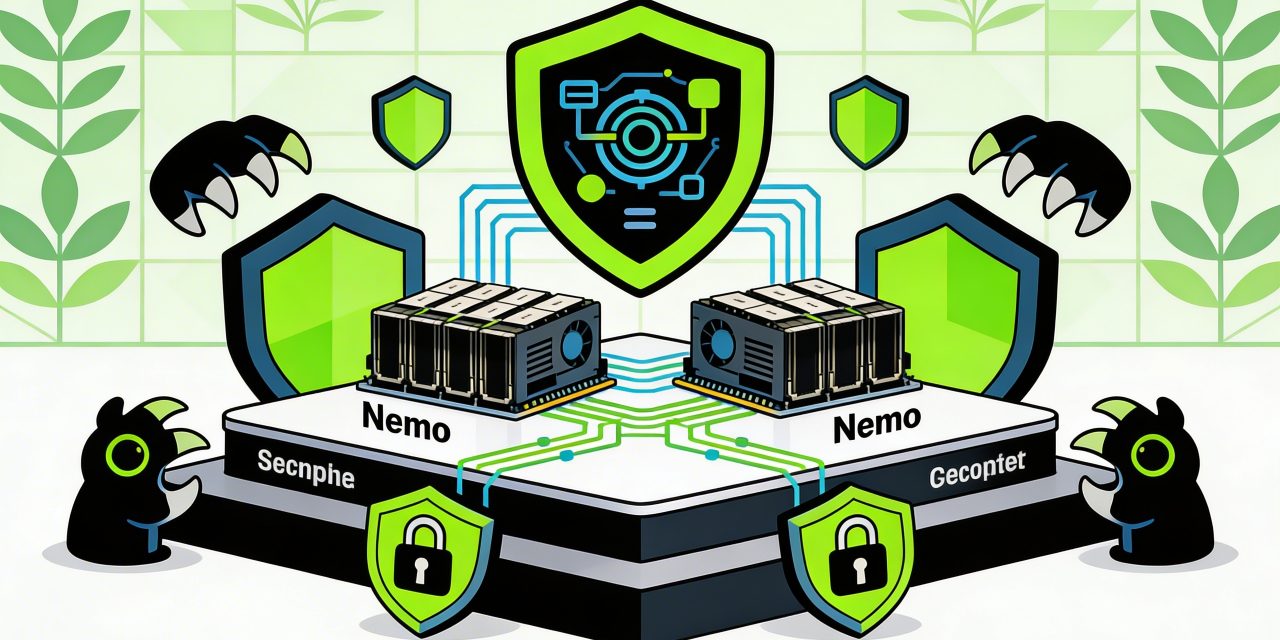
Nvidia NemoClaw is not a replacement for OpenClaw of OpenFang. It is a secure stack that installs and runs OpenClaw inside Nvidia OpenShell, a runtime built to add privacy controls, network restrictions, and policy enforcement to autonomous agents. If OpenClaw gives you the agent framework, NemoClaw gives you the controlled environment around it.
That distinction is the key to understanding why NemoClaw matters. OpenClaw is powerful because it can plan, use tools, write code, access files, and keep working over long sessions. It is also risky for exactly the same reasons. NemoClaw was introduced to make those always on agents safer to run on dedicated systems, inside companies, and in workflows where uncontrolled data access is a real problem.
Nvidia launched NemoClaw as part of the Nvidia Agent Toolkit and positioned it as a reference stack for secure OpenClaw deployments. In simple terms, it is OpenClaw plus sandboxing, plus model routing, plus policy guardrails. That is why many people describe it as OpenClaw with guardrails.
There is an important caveat. NemoClaw is still early software. Nvidia describes it as alpha or early preview, which means you should expect rough edges, changing behavior, and a setup that is heavier than a basic OpenClaw install. Even so, the architecture is already interesting because it addresses the biggest weakness of autonomous agents today, which is not capability but control.
What Nvidia NemoClaw is
NemoClaw is an open source OpenClaw plugin for Nvidia OpenShell. In practice, it gives you a guided way to install OpenClaw, place it inside a sandbox, connect it to approved inference backends, and apply security and privacy policies from the beginning.
Instead of letting the agent talk directly to the network, your file system, or a cloud model endpoint, NemoClaw routes those actions through OpenShell. OpenShell becomes the enforcement layer between the agent and the outside world. That means requests can be checked against policy before they happen, not just discouraged through instructions inside the model.
This is especially important for long running autonomous agents. A chatbot that only answers questions has a limited attack surface. An agent that can write code, spawn subagents, call tools, and keep running after you close your laptop is a very different kind of system. OpenClaw gives you much of that power. NemoClaw tries to make that power manageable.
The main components inside NemoClaw
- OpenClaw for the agent framework itself
- OpenShell for sandboxing and policy enforcement
- Security policies for network and file system control
- Inference routing for local and cloud models
- Privacy router for handling sensitive data more carefully
- Blueprint and CLI orchestration for setup and lifecycle management
- Nvidia Agent Toolkit as the broader runtime and deployment layer
OpenClaw
OpenClaw is still the foundation. It handles the agent experience itself, including planning, tool use, memory, scheduling, and interaction through a terminal interface or dashboard. NemoClaw does not replace those features. It wraps them in a safer runtime.
This is why it is misleading to frame NemoClaw as a competitor to OpenClaw. It depends on OpenClaw. The real value comes from the extra controls layered around it.
OpenShell
OpenShell is the core security runtime. It creates the sandbox where the agent lives and enforces the rules that decide what the agent can see, access, and send out. Nvidia describes OpenShell as the missing infrastructure layer beneath claws, and that description makes sense. Most agent frameworks still rely too much on prompts and internal logic for safety. OpenShell shifts safety into the environment itself.
The most important idea here is out of process policy enforcement. The guardrails do not live inside the same agent process they are meant to restrain. They live outside it. That makes them far harder for a confused agent, a prompt injection, or a lost context window to bypass.
Sandboxing and isolation
NemoClaw creates a sandboxed environment where network access, file system access, and inference calls are governed by policy. The default posture is strict. If the agent tries to reach an unapproved host, OpenShell can block the request and surface it for operator approval. File access works in the same spirit. The agent only gets the paths and permissions you allow.
This is one of the clearest improvements over plain OpenClaw. In a normal setup, your agent may have broad access to your machine or services. In NemoClaw, that access is narrower, auditable, and easier to reason about.
Inference routing and model choice
NemoClaw can route inference to different backends. That includes Nvidia cloud models such as Nemotron, as well as local backends like vLLM and local NIM services. The point is not only flexibility. The point is control.
Sensitive workloads can stay local on your own hardware. Less sensitive tasks can go to cloud models when policy allows it. Nvidia also describes a privacy router that helps direct requests to the right model path under defined rules. This hybrid design is one reason NemoClaw is more useful for real deployments than a simple one size fits all agent setup.
Nvidia Agent Toolkit
NemoClaw sits inside the broader Nvidia Agent Toolkit. That toolkit brings together models, runtimes, blueprints, evaluation tools, and deployment components for long running agents. In the NemoClaw context, the toolkit matters because it packages the install flow and connects OpenClaw to Nvidia’s runtime and model ecosystem.
You can think of NemoClaw as the OpenClaw focused entry point into that larger stack.
Blueprints and CLI orchestration
Under the hood, NemoClaw uses a versioned blueprint to build the environment. The CLI resolves the artifact, verifies it, plans the required resources, and applies the setup through OpenShell. In simpler language, the tool is not just launching an agent. It is provisioning a controlled runtime with a gateway, sandbox, inference provider, and network policy.
This orchestration layer is why Nvidia can offer a near one command experience. It is also why NemoClaw feels closer to infrastructure than to a lightweight developer experiment.
Dedicated compute
NemoClaw is designed for always on agents, which means dedicated compute matters. Nvidia highlights systems such as GeForce RTX PCs and laptops, RTX PRO workstations, DGX Station, and DGX Spark. The idea is straightforward. If your agent is going to write code, use tools, and keep working all day, it needs a stable home instead of a temporary session.
How NemoClaw works in practice
A typical NemoClaw flow starts with an installer that prepares the environment, adds dependencies if needed, launches an onboarding step, creates a sandbox, configures inference, and applies a baseline security policy. After that, you connect to the sandbox and interact with your OpenClaw agent through a terminal interface or command line.
The important detail is what happens behind the scenes. The agent is not operating directly on the host in an unrestricted way. OpenShell sits between the agent and outbound connections, file access, and model calls. Policy decides what is allowed. When the agent wants to do something outside its approved boundary, that action can be blocked or escalated for approval.
Imagine you ask an agent to inspect internal code, write a patch, and research a public package. With plain OpenClaw, those actions can blend together unless you build your own controls. With NemoClaw, local files can stay inside the sandbox, local model inference can handle sensitive code, and any attempt to reach a new domain can be stopped until you approve it.
That design changes the trust model. You are no longer trusting the agent to behave well on its own. You are trusting the environment to enforce behavior around the agent.
NemoClaw vs OpenClaw
The short version is simple. NemoClaw is better than plain OpenClaw when you care about safety, privacy, and operational control. It is not better because it replaces OpenClaw. It is better because it adds the pieces OpenClaw alone does not fully provide.
Security moves outside the agent
Plain OpenClaw can use prompts, internal checks, and workflow logic to behave responsibly. That helps, but it is still the agent policing itself. NemoClaw changes that by moving enforcement into OpenShell. If the agent is compromised, confused, or loses context, the external policy layer still remains in control.
Network egress is controlled
One of the biggest risks with autonomous agents is quiet data exfiltration. An agent that can browse, call APIs, and send results outward can also leak internal information. NemoClaw addresses that with strict network policy and operator controlled egress approval. In plain language, the agent cannot simply send data out because it wants to.
File system access is narrowed
OpenClaw is powerful because it can work with tools and files. That is also why it can be risky. NemoClaw limits what the agent can access and keeps that access inside a sandbox. This reduces the chance of accidental damage and unauthorized reads or writes.
Model routing becomes more useful
OpenClaw by itself does not give you a strong privacy aware routing layer. NemoClaw does. You can run open models locally for sensitive work and still use cloud frontier models when policy allows it. That creates a better balance between privacy, performance, and cost.
It fits enterprise environments more naturally
Most companies do not reject agent frameworks because the models are weak. They reject them because the control surface is too loose. NemoClaw is better aligned with enterprise needs because it is designed to work with policy engines, security tooling, and governed infrastructure. It gives you a clearer answer to questions about where data goes, what the agent can do, and how actions are monitored.
It is built for always on deployment
OpenClaw is excellent for experimentation. NemoClaw is more clearly aimed at durable deployment. The stack is designed around dedicated compute, local model options, controlled network behavior, and long running agents that need stable resources. If your goal is an AI assistant that stays active around the clock, that framing matters.
Where OpenClaw still has an edge
Being better in one dimension does not mean being better in every dimension. Plain OpenClaw is still simpler. It has fewer moving parts, less infrastructure overhead, and a lower barrier for quick experimentation. If you want to test an idea fast on your own machine and you accept the risk, OpenClaw alone may feel lighter and faster.
NemoClaw also comes with the usual costs of a more serious stack. Setup is heavier. The project is still early. Some workflows currently expect a fresh OpenClaw installation. Docker, local model serving, and policy configuration add complexity. So the real comparison is not simple versus advanced. It is freedom versus governed freedom.
Why NemoClaw matters
NemoClaw matters because it treats autonomous agents like software that needs isolation, permissions, and routing, not like a chatbot that only needs better prompting. That shift is bigger than one Nvidia release. It points to the next phase of secure AI agents, where the winning platforms will not just be the ones with the smartest model, but the ones that can make those models safe to operate in normal environments.
If you have been impressed by OpenClaw but hesitant to trust it with real data, NemoClaw is the clearest answer so far to that hesitation. It does not remove all risk, and Nvidia itself presents the project as early stage. But it moves the conversation from trust the agent to trust the boundary around the agent. For anyone thinking seriously about autonomous agents, that is the more useful place to start.