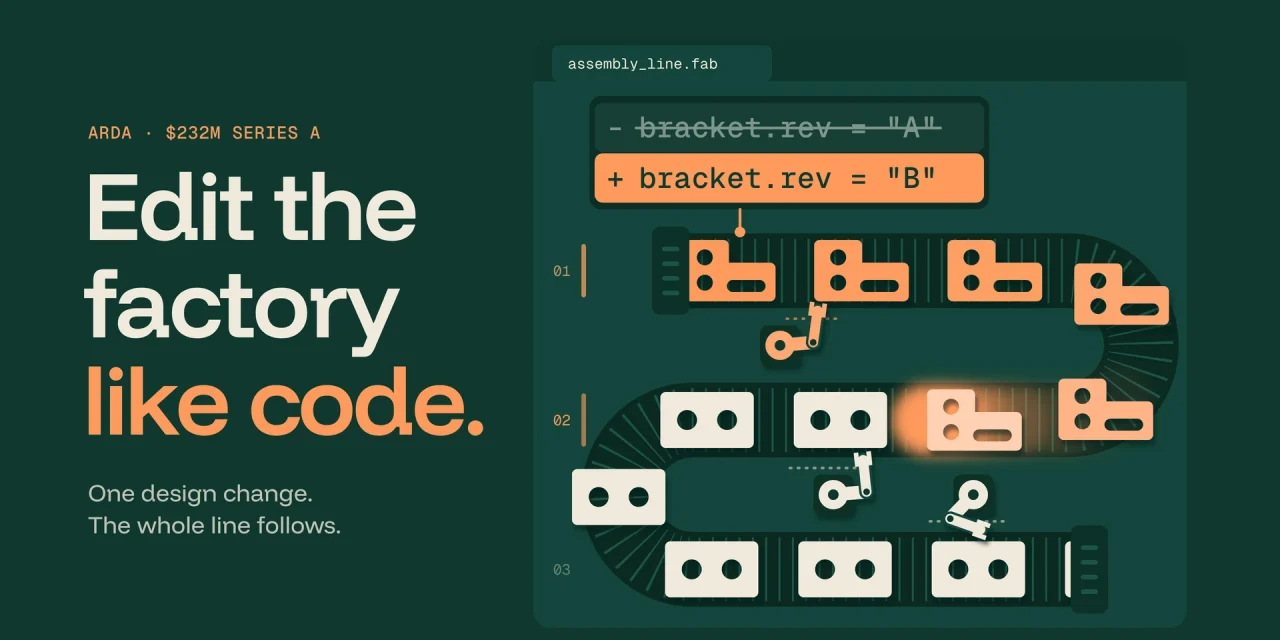
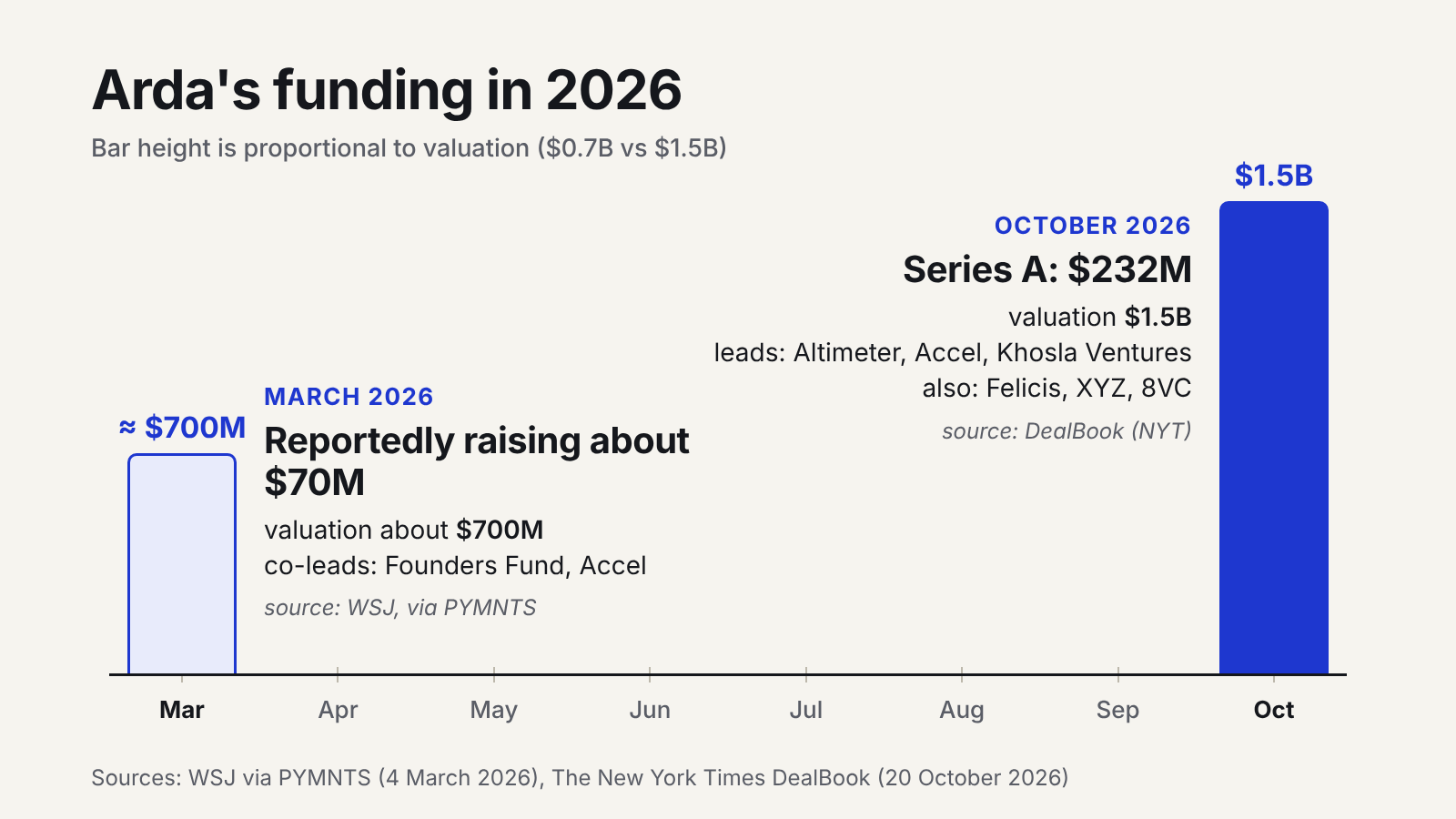
Arda Industries, the manufacturing AI start-up of former OpenAI chief research officer Bob McGrew, has raised a $232 million Series A at a $1.5 billion valuation. Altimeter Capital, Accel and Khosla Ventures led the round, DealBook reported on 20 October 2026. Arda wants to give manufacturing engineers one software environment that stays in sync when a product design changes, and it plans AI agents that reprogram assembly-line robots in days instead of months. Customers pay per task the agents complete, not per user.
Below you find what Arda actually says it builds, how the story changed since the first reports in March, what per-task pricing means for buyers, and what is still unproven.
What an IDE for manufacturing engineering means
McGrew describes Arda as an “I.D.E. for manufacturing engineering”. In software, an integrated development environment is the one place where a developer writes, runs and tests code. Arda wants to be that place for the engineers who turn a product design into a working production line.
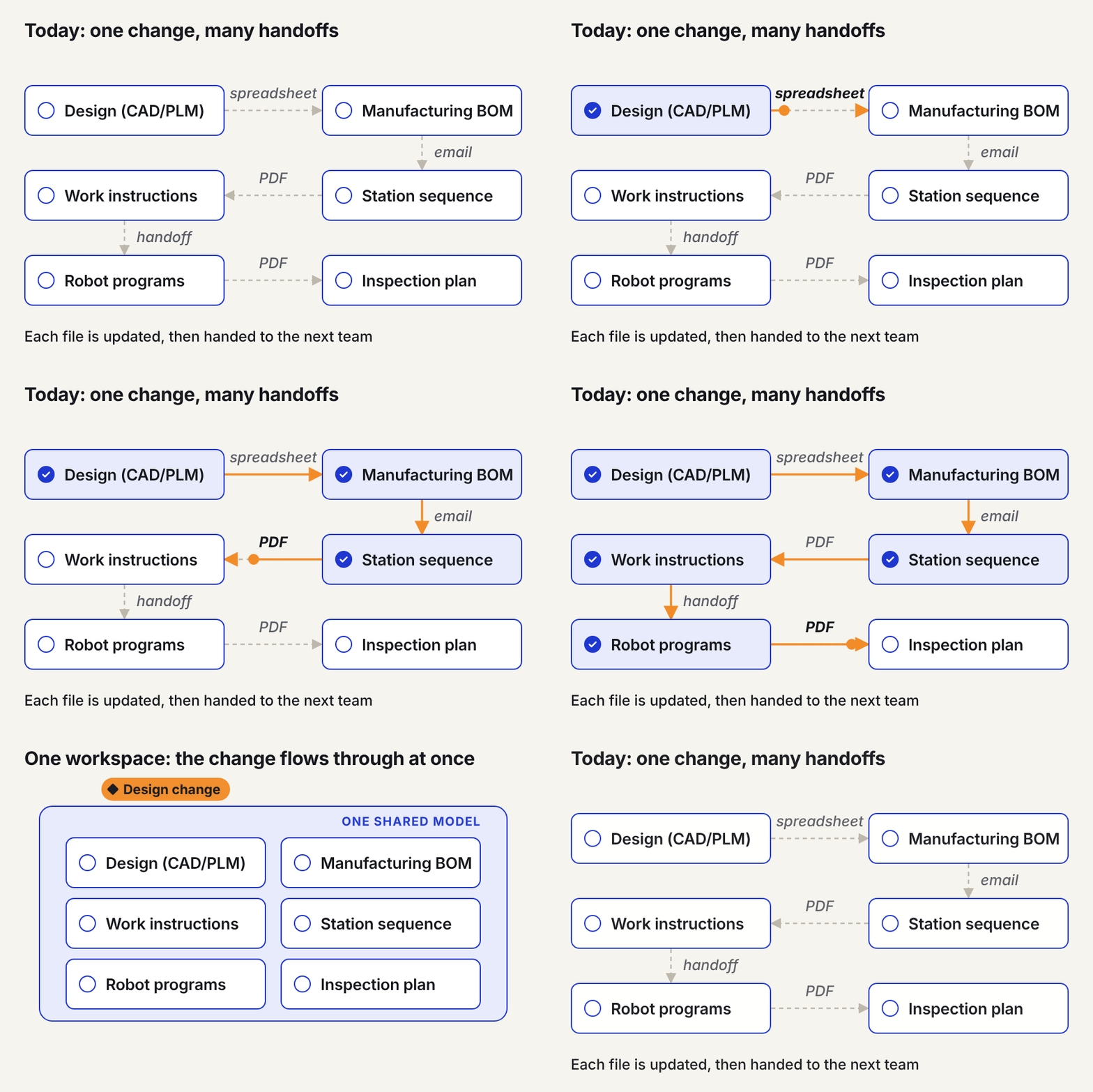
That job is spread over many tools today. A design engineer releases a product structure in CAD and PLM. A manufacturing engineer then has to translate it into something a factory can build: a manufacturing bill of materials, the sequence of stations, tooling, work instructions, inspection points and robot programs. Those pieces live in different systems and, as manufacturing software vendor Advantive describes it, they are often connected through spreadsheets, PDFs and handoffs between teams.
The pain shows up when the design changes. An approved change only matters once it reaches the floor, which means every downstream document and program has to be updated, checked and released again. Arda’s promise is that this work lives in one model and updates when the design does.
The second layer is robotics. Arda plans to use AI agents for robots and hopes to cut the time needed to reconfigure an assembly line from months to days. When the Wall Street Journal first reported on the company in March, it described a video model that analyses footage from factory floors to learn how tasks are done and to train robots, as PYMNTS summarised.
How the pitch changed since March
In March 2026 the WSJ reported that Arda was raising about $70 million at a valuation of roughly $700 million, with Founders Fund and Accel as co-leads. The story then was about a lights-out factory: software and video models that would eventually let robots run plants on their own. The name comes from Tolkien, where Arda means the world.
Seven months later the valuation has roughly doubled and the order of the pitch has flipped. The engineering workspace comes first. Robots come second. That is the more credible order. Software for engineers can be sold, deployed and measured in weeks. Robots that reconfigure themselves need data from many plants, safety validation and a lot of trust from factory managers.
Paying per task instead of per seat
Arda earns money on the number of tasks its agentic tools perform, McGrew told DealBook. That fits a wider shift in AI software. Customer service is the best known example: Intercom charges $0.99 per outcome for its Fin agent instead of a fee per support agent.
For a manufacturer this model has a clear upside. You pay when work gets done, and a small engineering team does not need dozens of licences to benefit. It also raises questions you should settle before you sign:
- What counts as one task? Updating one work instruction, or the whole set after one engineering change?
- Who checks the output, and do you pay for tasks an engineer has to redo?
- How predictable is the bill in a month with many design changes, such as a product launch?
Who is behind Arda
McGrew joined OpenAI in 2017, became vice president of research in 2018 and later chief research officer. He left in September 2024, on the same day as CTO Mira Murati. Before OpenAI he was one of the early engineers at Palantir, where he worked with two of Arda’s co-founders, Alex Mark and Jakob Frick.
The fourth co-founder, Augustus Odena, co-founded Adept, a start-up that built AI agents to carry out tasks in any software tool. In June 2024 Amazon hired Adept’s founders and licensed its technology. That background matters here: an agent that can operate engineering software is exactly what an IDE for manufacturing needs.
Besides the three lead investors, Felicis, XYZ Venture Capital and 8VC joined the round. Accel partner Steve Loughlin told DealBook the goal is for companies to “build something quickly to their specification onshore and know the whole lineage of the supply chain”. Felicis general partner Peter Deng, who worked with McGrew at OpenAI, spoke of “the first truly A.I.-native industrial base”.
Why defense and data centers come first
Arda works with military and data center companies, McGrew said. One of them is Anduril, the defense technology company of Palmer Luckey. Anduril launched an employee share sale in October that values it at roughly $90 billion, up from $61 billion in May, Dealroom reported, citing Bloomberg.
Both sectors share three traits that suit Arda. They build complex hardware in relatively small series, their designs change often, and they want production in the United States. Capital is following that logic. Hadrian, which runs automated factories for aerospace and defense parts, raised $1.37 billion at a $7.87 billion valuation in August, with Altimeter among its investors. On i-scoop we covered similar bets, from Walden Robotics and its humanoids for factories to Atomic Machines, which wants to compile hardware from code.
What is still unproven
Arda has not shown a product in public, and it has shared no customer results. The shift from months to days for a line reconfiguration is a goal, not a measured result. Several hurdles stand between the pitch and a factory floor.
- Deployment. Factories already struggle to roll out mature industrial software. When the March news broke, commenters on Slashdot pointed exactly to that, and to how automated US plants already are.
- Incumbents. Siemens already sells an engineering agent inside its TIA Portal automation software. It plans, uses tools and hands results to an engineer for review, and Siemens claims up to 50% higher engineering efficiency, according to ARC Advisory Group. Arda has to win against companies that already sit in every plant.
- Data and safety. Agents that reprogram robots need reliable data from each plant and a validation process that safety engineers accept.
Labour is less of an obstacle than it may seem. Deloitte and the Manufacturing Institute estimate that US manufacturing could need 3.8 million workers by 2033 and that 1.9 million of those jobs could go unfilled, The Manufacturer reported. A tool that lets each engineer handle more changes adds capacity where it is missing. Whether robots lead to the final offshoring Jacob Rintamaki describes is a longer and different debate.
Frequently asked questions
What does Arda Industries do?
Arda builds software that brings the work of manufacturing engineers into one platform and keeps it updated as product designs change. It also plans AI agents that reconfigure robots on assembly lines.
How much has Arda raised?
Arda raised a $232 million Series A at a $1.5 billion valuation in October 2026, led by Altimeter Capital, Accel and Khosla Ventures. In March 2026 the WSJ reported an earlier raise of about $70 million at roughly $700 million.
Who founded Arda?
Bob McGrew, former chief research officer at OpenAI, with Alex Mark and Jakob Frick, whom he worked with at Palantir, and Augustus Odena, a co-founder of Adept.
How does Arda charge customers?
Per task that its agentic tools perform, according to McGrew, instead of a licence per user.
The real asset is the factory’s know-how
For Europe this is more than a US funding story. European plants face the same engineering bottlenecks, yet only 20% of EU companies with ten or more employees used AI in 2025, up from 13.5% a year earlier, according to Eurostat figures. The European Commission’s Apply AI Strategy names manufacturing as a flagship sector but lists few concrete actions for it.
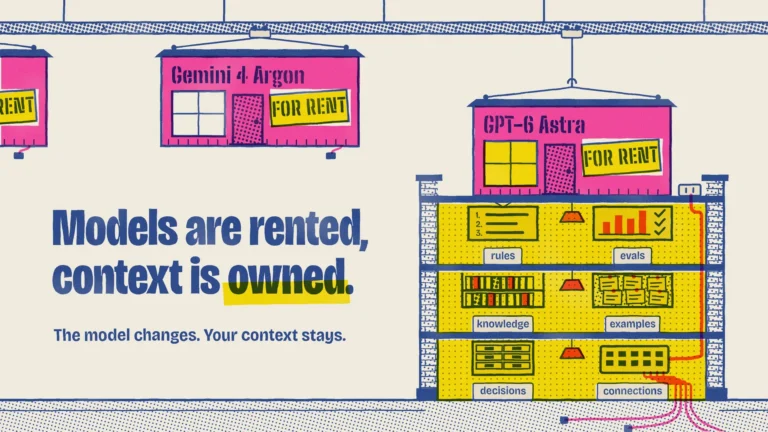
The deeper question is where a factory’s engineering knowledge ends up. The routings, the work instructions and the reasons behind every change are what make a plant run. A platform that holds that context becomes hard to replace, whatever AI model runs on top of it. As we argued in models are rented, context is owned, that context is the part worth keeping in your own hands. European manufacturers evaluating Arda, Siemens or anyone else should ask first how they get that knowledge back out. For the wider policy angle, see our piece on sovereign AI in Europe.