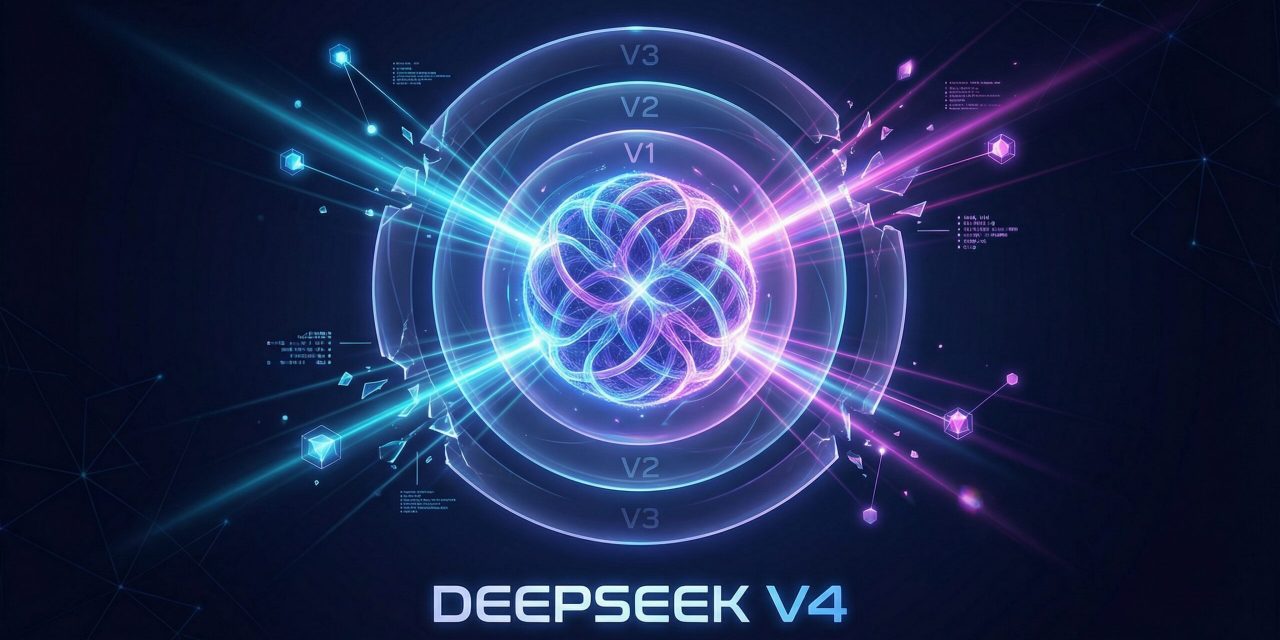
DeepSeek V4 represents a significant leap forward for the Chinese AI lab that gained global attention in early 2025. Here’s what we know about its expected innovations:
Key Expected Innovations
Native Multimodal Architecture
- Native multimodal capabilities with support for picture, video, and text generation in a single unified model
- This is a major shift from V3’s text-focused design, enabling end-to-end generation across modalities
MODEL1 Architecture
- Tiered KV cache storage designed to cut memory usage by 40%
- Engram memory module – a revolutionary memory retrieval architecture introduced in a January 2026 paper by founder Liang Wenfeng
- Conditional Memory system for more efficient information retrieval
Coding Revolution
- 10x improvement in coding capabilities compared to V3 (according to leaks)
- Deterministic debugging with mHC (Manifold-constrained Hyper-connections) to reduce hallucinated fixes
- Structural coherence improvements for preserving code architecture during generation
- Lower per-token costs despite improved performance
Performance Improvements
- Math: 92% (up from 88% in V3)
- Coding: 90% (up from 86% in V3)
- Larger context window with support for 1M+ tokens
- Faster inference speeds
Cost Efficiency
- 90% hardware cost reduction through architectural optimizations
- Targeting inference as the primary focus rather than just training
Release Timeline
- Originally expected around February 2026, now targeting March 4th 2026
- Financial Times reported it will be released “next week” as of March 2, 2026
Market Impact
DeepSeek V4 is being watched closely as it could significantly disrupt the AI landscape, particularly in competition with OpenAI, Anthropic, and Google. The combination of native multimodal capabilities plus aggressive cost reductions could force major changes in the industry pricing structure.
The model appears to signal DeepSeek’s transition from a reasoning-focused lab to a full-stack multimodal AI provider.