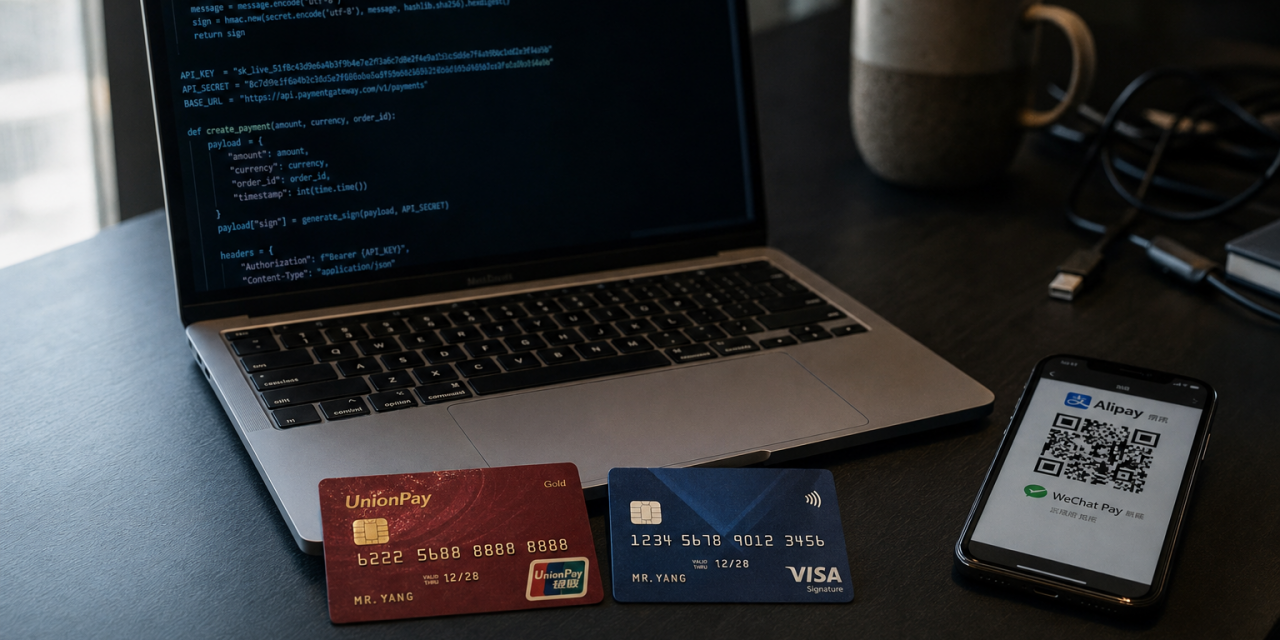
Getting Claude tokens at a reasonable price from inside China is hard. Anthropic does not officially sell to mainland users, payment rails reject UnionPay, Alipay and WeChat Pay, and the api.anthropic.com endpoint has unstable connectivity from Chinese networks. Yet demand keeps growing. Developers, research teams and product builders want Claude Sonnet and Opus alongside their existing GPT and DeepSeek stacks, and a layered ecosystem of routing services, virtual cards and gateway providers has filled the gap. This guide walks through the options, what each method costs you, and why the bigger story is not about access but about who controls the routing layer and the risks involved.
Why buying Claude tokens in China is complicated
Three barriers stack on top of each other. The first is payment. Anthropic only accepts Visa or Mastercard issued outside mainland China, so a Chinese developer with a domestic salary and a domestic bank account starts at zero. The second is network reachability. The Anthropic API is not formally blocked, but timeouts and latency spikes make it unsuitable for production traffic without a proxy. The third is identity. Account creation often asks for a non-Chinese phone number, which adds another layer of workaround.
The result is a market where the official channel is technically open but practically closed. And whenever an official channel is practically closed, an unofficial one fills the space.
The methods developers actually use
Direct Anthropic accounts
Some developers still go the official route. They obtain a Hong Kong or US issued credit card, run a stable VPN, and use a foreign SIM for verification. It works, but the setup is fragile. VPN drops kill production calls, foreign cards expire, and Anthropic occasionally flags accounts that show proxy patterns. Pricing is also fixed at the published API rates, which is more than some other providers are offering.
Virtual credit cards
Services like DuPay, OneKey and WildCard issue Hong Kong virtual Visa cards funded with USD. The cards work for a while, sometimes for months, sometimes for days. Anthropic’s fraud system periodically sweeps virtual card BINs, and when that happens the linked account gets suspended. Add issuance fees and top-up fees on top of the actual token cost, and the savings are thin.
API gateways and resellers
This is where most of the volume actually flows. Gateway services like Qcode.cc act as an intermediary: you pay them in Alipay, WeChat Pay or RMB bank transfer, they hold a pool of Anthropic credits on their side, and they forward your requests through an OpenAI compatible endpoint. From the developer’s perspective, it is a five minute setup. No VPN, no foreign card, no SMS verification. Top up with one dollar minimum, generate a key, point your SDK at the gateway base URL.
The pricing claim from these gateways is usually 20 to 30 percent below Anthropic’s official list. That sounds impossible until you look at how it works. Gateways buy in bulk, sometimes negotiate enterprise rates, and pool unused capacity across thousands of customers. They also subsidize Claude with margins from cheaper models like DeepSeek to keep developers on the platform. The cheaper Claude becomes the loss leader.
What you give up for the discount
Cheap tokens are not free of cost. They shift the cost somewhere you may not be watching.
- Log visibility. Every prompt and completion routes through the gateway. Whoever owns the gateway sees your queries, your customer data, and your system prompts. For a startup building on top of Claude, that is your entire moat passing through someone else’s pipe.
- Account stability. Gateway providers can lose their upstream Anthropic accounts at any moment. When that happens, your service degrades or fails until they rotate to a new pool.
- Compliance ambiguity. Routing AI traffic through unofficial channels sits in a gray zone. It is not clearly illegal, but it is not clearly approved either, and the regulatory direction in China around generative AI is tightening.
- Model fidelity. Most gateways pass requests through unmodified, but you have no enforceable guarantee. A reseller that silently downgrades Opus calls to Sonnet, or cache and replay responses, would be hard to detect.
The pricing picture beyond the API
For Claude Pro and Max subscriptions the regional spread is wide. Nigeria sits at around 10.88 dollars per month, Egypt at 13.08, Pakistan at 17.54. Denmark, the UK and Germany hover between 25 and 28 dollars. The gap between cheapest and most expensive reaches 158 percent. Some users in China switch their App Store region to capture this arbitrage, though it requires a local billing address, a matching IP and regional gift cards, and providers try to eliminate region hopping.
API pricing, by contrast, is globally uniform on Anthropic’s side. The discount inside China comes purely from the reseller layer, not from regional list prices.
A practical setup for most teams
If you are building inside China and need Claude tokens at a workable cost, the realistic stack looks like this. Use a domestic gateway for development and non-sensitive production traffic. Keep a direct Anthropic account, paid through a Hong Kong card, for anything that touches confidential customer data or proprietary prompts. Encrypt or hash sensitive fields before they reach any third party endpoint. Keep a fallback model wired in, ideally DeepSeek or Qwen, so a gateway outage does not stop your product.
For latency sensitive features, Claude Haiku through an optimized gateway typically lands in the 200 to 500 millisecond range from Chinese networks, which is workable for chat and autocomplete.
The part nobody talks about
The interesting question is not whether you can buy cheap Claude tokens in China. You can. The question is what happens to the broader system when access tightens. If Anthropic locks down its console more aggressively, demand does not vanish, it reroutes. More intermediaries appear, accountability gets thinner, and the incentive to monetize logs grows. AI access is quietly becoming a political economy of channels, and the layer that matters most is no longer the model itself. It is the routing, the payment, the identity and the logs sitting between you and the model.