The dawn of agentic commerce
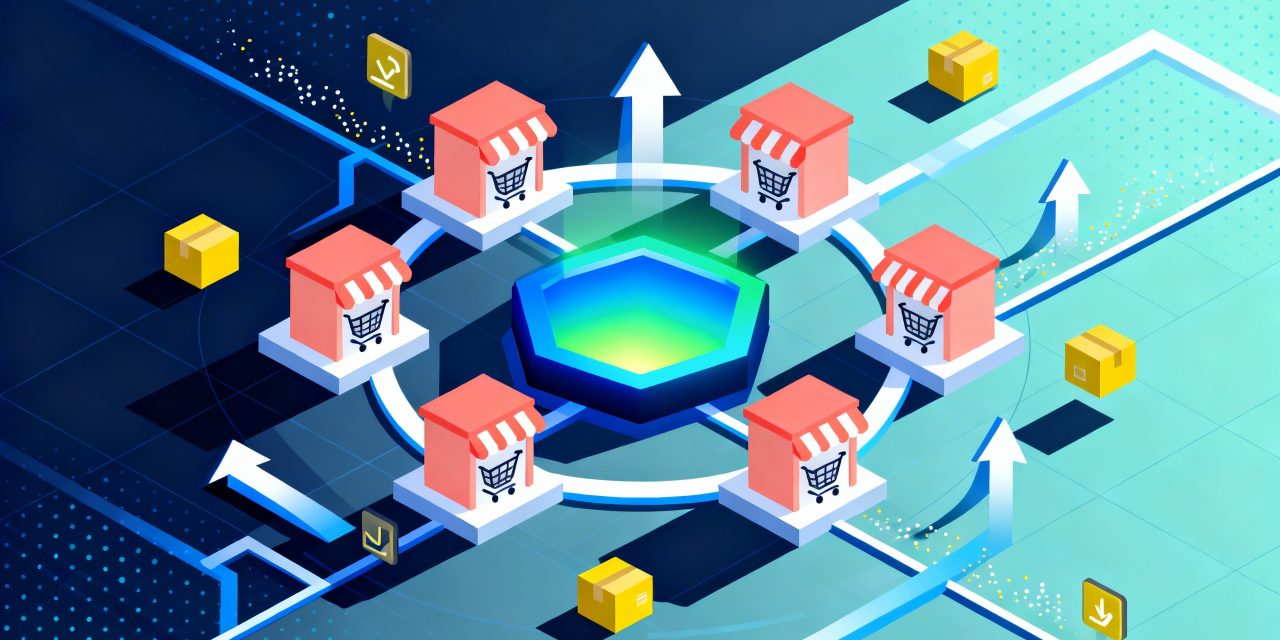
The way consumers discover and purchase products online is undergoing a fundamental transformation. Traditional search-to-checkout journeys are being replaced by conversational experiences where artificial intelligence agents guide shoppers from initial curiosity to final purchase. At the center of this shift stands Google’s Universal Commerce Protocol (UCP), an open standard designed to standardize how AI agents interact with e-commerce systems across the entire shopping journey.
For e-commerce businesses, this represents both an opportunity and a challenge. The opportunity lies in reaching customers at precisely the moment they express purchase intent within AI-powered surfaces like Google’s AI Overview and Gemini. The challenge involves understanding how to integrate with these new systems while maintaining control over customer relationships and brand identity.
What is the Universal Commerce Protocol
The Universal Commerce Protocol is an open-source standard that establishes a common language between AI agents, businesses, and payment providers. Unlike traditional e-commerce integrations that require custom connections for each platform, UCP creates a unified framework that works across multiple surfaces and systems.
Developed by Google in collaboration with industry leaders including Shopify, Etsy, Wayfair, Target, and Walmart, UCP addresses a critical bottleneck in agentic commerce. As consumers increasingly turn to conversational interfaces for shopping, businesses face the challenge of building separate integrations for every AI surface. UCP eliminates this complexity by providing standardized capabilities that agents can discover and negotiate dynamically.
The protocol covers the complete commerce journey, from product discovery and checkout to post-purchase support and order management. It’s designed to be vendor-agnostic and compatible with existing protocols like Agent Payments Protocol (AP2), Agent2Agent (A2A), and Model Context Protocol (MCP). This compatibility ensures that businesses can adopt UCP without abandoning their existing infrastructure.
Core architecture and capabilities
UCP operates through a layered architecture that separates responsibilities into distinct components. At its foundation, the protocol defines core commerce primitives like checkout, product discovery, and fulfillment. These primitives can be extended through specialized modules that add functionality such as discounts, loyalty programs, or custom fulfillment options.
Businesses publish their supported capabilities in a standard JSON manifest located at /.well-known/ucp on their domain. This manifest allows AI agents to dynamically discover what features a merchant supports without requiring hard-coded integrations. When an agent interacts with a business, it negotiates which capabilities both parties can handle, creating a flexible system that adapts to each transaction’s specific requirements.
The advantages of implementing UCP
For e-commerce businesses, UCP offers several compelling advantages that extend beyond simple technical integration. These benefits touch on visibility, customer experience, operational efficiency, and competitive positioning in an AI-driven marketplace.
Enhanced visibility in AI surfaces
The most immediate benefit is access to high-intent shoppers within Google’s conversational experiences. When users research products in AI Mode or Gemini, businesses using UCP can show their inventory directly within the conversation. This represents a fundamental shift from traditional search advertising, where visibility depends on keyword bidding and ad placement.
With UCP, product discovery happens organically within the context of a conversation. If a user asks for recommendations on camping equipment, relevant products from participating retailers appear naturally in the response. This contextual visibility often proves more effective than traditional ads because it aligns with the user’s immediate needs and conversational flow.
Maintaining brand control and customer relationships
Unlike marketplace models where platforms control the customer relationship, UCP ensures businesses remain the merchant of record. This means you retain full ownership of customer data, transaction details, and post-purchase relationships. The protocol facilitates the transaction but doesn’t insert itself between you and your customers.
This distinction matters significantly for long-term business strategy. Customer data enables personalization, retention marketing, and lifetime value optimization. By maintaining these relationships, businesses can build direct connections with shoppers rather than becoming dependent on platform algorithms for visibility.
Reduced integration complexity
Traditional e-commerce integrations require custom development for each new platform or channel. As AI surfaces proliferate, this approach becomes unsustainable. UCP solves this problem by providing a single integration point that works across multiple agents and platforms.
The protocol’s capability negotiation system means businesses can implement only the features they need. A small retailer might start with basic checkout functionality, while a larger operation could add loyalty integration, subscription management, and advanced fulfillment options. The system scales with your business requirements without forcing unnecessary complexity.
Flexible payment architecture
UCP separates payment instruments (what customers use to pay) from payment handlers (how payments are processed). This architecture allows dynamic negotiation of payment options based on cart contents, customer location, and merchant preferences. A transaction might support Google Pay, PayPal, or traditional card payments depending on what both the merchant and customer can handle.
This flexibility extends to fraud prevention, regional payment methods, and specialized processors. Businesses can maintain their existing payment service provider relationships while participating in agentic commerce, avoiding the lock-in that often accompanies platform-specific payment systems.
How the protocol works in practice
Understanding UCP’s operational mechanics helps clarify how it transforms the shopping experience. The protocol orchestrates several distinct phases, each designed to balance automation with human oversight when necessary.
Discovery and capability negotiation
When an AI agent encounters a potential transaction, it begins by fetching the merchant’s UCP profile. This profile declares which services and capabilities the business supports, along with available payment handlers and extensions. The agent compares this against its own capabilities to determine what features both parties can utilize.
This negotiation happens transparently in the background. If a merchant supports a loyalty program extension but the agent doesn’t, the transaction proceeds without loyalty features. If both support it, the agent can offer reward redemption or point accumulation as part of the checkout flow. The system gracefully handles capability mismatches without breaking the transaction.
Checkout state management
UCP models checkout as a state machine that progresses through distinct phases: initiated, in progress, requires action, and completed. This structure accommodates both fully automated transactions and those requiring human intervention. When an agent can complete all steps autonomously, the checkout flows seamlessly from start to finish.
However, some transactions demand human participation due to regulatory requirements, merchant policies, or capability gaps. In these cases, UCP provides structured handoff mechanisms. The merchant response includes context about what’s been completed and a continuation URL where the customer can pick up exactly where the agent left off. This ensures no transaction gets abandoned due to technical limitations.
Embedded checkout protocol
For situations requiring human involvement, UCP includes the Embedded Checkout Protocol (ECP). This enables bi-directional messaging between the agent and merchant while keeping the customer within the agent’s interface. The merchant’s checkout interface loads in a secure iframe, maintaining brand consistency while leveraging the agent’s payment and address capabilities.
ECP establishes a JSON-RPC channel that allows state updates from the merchant and credential sharing from the agent. When payment collection is needed, the system surfaces the agent’s native payment sheet, using information already stored in the customer’s wallet. This approach combines the merchant’s custom logic with the agent’s convenience features, creating a seamless experience that respects both parties’ requirements.
Impact on online advertising and discovery
UCP fundamentally alters how e-commerce businesses approach online advertising and customer acquisition. The shift from keyword-based search to conversational discovery requires new strategies and metrics for measuring success.
Direct offers and contextual advertising
Google’s Direct Offers feature represents a new advertising model within AI Mode. Instead of bidding on keywords, retailers can present exclusive discounts when users express purchase intent in their queries. If someone searches for “a modern rug for a high-traffic dining room,” participating retailers can offer targeted discounts directly in the AI response.
This approach differs from traditional search ads in several ways. The targeting is contextual and intent-based rather than keyword-driven. The ad format integrates naturally into the conversational flow rather than appearing as a separate sponsored listing. And the value proposition is explicit, with discounts and offers presented at the moment of highest purchase intent.
Business agent for brand engagement
Google’s Business Agent feature allows retailers to deploy branded AI assistants directly in search results. These agents can answer product questions, provide recommendations, and guide customers through the decision process using the brand’s voice and expertise. It’s analogous to having a knowledgeable sales associate available 24/7 within Google’s interface.
For businesses, this creates new opportunities for customer engagement beyond traditional advertising. Instead of competing for ad placement, you can provide value through helpful, branded interactions. As these agents evolve, they’ll support direct purchases, loyalty program integration, and personalized recommendations based on customer history.
Conversational commerce optimization
Success in UCP-powered commerce requires optimizing for conversational discovery rather than traditional SEO. Google is introducing new data attributes in Merchant Center specifically designed for this purpose. These attributes go beyond basic product information to include answers to common questions, compatible accessories, and suitable substitutes.
Think of this as semantic SEO for AI agents. Instead of optimizing for specific keywords, you’re providing rich context that helps agents understand when your products are relevant. A camping tent listing might include information about weather resistance, setup time, and ideal use cases, enabling agents to recommend it accurately in response to natural language queries.
Measuring success in agentic commerce
Traditional e-commerce metrics like click-through rates and cost per click become less relevant in conversational commerce. Instead, focus on metrics that reflect the full customer journey: conversation-to-purchase conversion rates, average order value from AI surfaces, and customer lifetime value from UCP-acquired customers.
Attribution also becomes more complex. A customer might discover your product through an AI conversation, research it on your website, and complete the purchase days later through a different channel. Developing attribution models that account for these multi-touch journeys is essential for understanding UCP’s true impact on your business.
Implementation strategies for e-commerce businesses
Adopting UCP requires thoughtful planning and execution. The implementation path varies depending on your technical infrastructure, business model, and integration goals. However, several common patterns emerge across successful deployments.
Prerequisites and preparation
Before implementing UCP, ensure you have an active Google Merchant Center account with product feeds that meet eligibility requirements. This foundation is essential because Google uses this data to surface your inventory in conversational experiences. Your product information should be comprehensive, accurate, and optimized for discovery in natural language contexts.
Review your existing checkout flow to identify which capabilities you want to expose through UCP. Consider starting with core functionality like basic checkout and payment processing, then expanding to advanced features like loyalty integration or custom fulfillment options as you gain experience with the protocol.
Technical integration approaches
UCP supports multiple integration methods to accommodate different technical environments. The REST API binding provides a straightforward HTTP-based interface suitable for most web applications. For businesses using Model Context Protocol, MCP binding offers native integration that aligns with existing agent architectures.
Google provides reference implementations and SDKs in multiple languages to accelerate development. These tools handle protocol details like capability negotiation and state management, allowing you to focus on business logic rather than low-level protocol mechanics. The Python and TypeScript implementations are particularly mature and well-documented.
For Shopify merchants, integration is simplified through Checkout Kit, which provides UCP functionality with minimal code. This approach leverages Shopify’s existing infrastructure while exposing the necessary capabilities to AI agents. Other e-commerce platforms are developing similar integration tools as UCP adoption grows.
Testing and validation
Before going live, thoroughly test your UCP implementation using Google’s sandbox environment. Create test scenarios that cover various checkout paths, including successful transactions, payment failures, and handoff situations. Verify that your capability manifest accurately reflects your supported features and that negotiation works correctly with different agent profiles.
Pay particular attention to error handling and edge cases. What happens if a payment processor is temporarily unavailable? How does your system respond when an agent requests an unsupported capability? Robust error handling ensures a smooth customer experience even when unexpected situations arise.
Preparing for the agentic commerce future
Start by understanding your customers’ shopping behaviors and pain points. Where do they currently experience friction in the buying process? How might conversational interfaces address these challenges? Use these insights to prioritize which UCP capabilities to implement first.
Consider UCP adoption as part of a broader digital transformation strategy rather than an isolated technical project. The protocol’s success depends on having accurate product data, efficient fulfillment processes, and responsive customer service. Strengthening these operational foundations ensures you can deliver on the promises made through AI-powered discovery.
The competitive landscape is evolving rapidly, with OpenAI, Amazon, Perplexity, and others developing their own approaches to agentic commerce. While UCP aims to be an open standard, the reality is that multiple protocols and platforms will coexist. Businesses should maintain flexibility in their commerce architecture, avoiding lock-in to any single approach while actively participating in emerging standards.