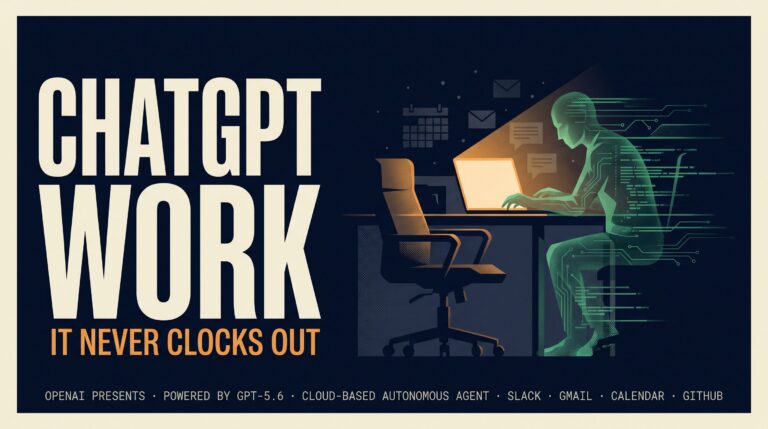
In january 2026, OpenAI publicly confirmed that it will test ads in certain ChatGPT experiences, starting with the free tier and a new lower cost plan. That single decision turns conversational AI from a purely utility driven product into something closer to a new distribution channel, where users ask for help and brands can appear at the exact moment of intent.
For marketers this raises practical questions. what exactly counts as a ChatGPT ad, why is it happening now, what will be possible in 2026, how much might it cost, how do you approach it without hurting trust, and where does this channel actually make sense.
What advertising on ChatGPT is
ChatGPT ads are best understood as sponsored placements that appear adjacent to a conversation, not as paid manipulation of the model’s answer. OpenAI’s stated goal is separation: the response remains the response, while ads are shown in a clearly labelled block that is distinct from the assistant’s output.
In practice, this looks more like sponsored results or sponsored suggestions than classic display banners. The ad is triggered when the current conversation suggests commercial relevance. If someone is planning a trip, a hotel offer might be relevant. If someone is planning a dinner, a sponsored product could appear. The defining idea is context targeting based on what the person is discussing right now, rather than keyword bidding alone.
How it differs from search ads
- Conversation level context matters more than single queries. intent is often revealed across multiple messages.
- The user experience is intimate. people ask personal questions, including sensitive ones. that changes what good advertising must look like.
- Relevance is judged by flow. an ad that interrupts feels worse than an ad that behaves like a helpful next step.
Why ads are launching now
The simplest answer is economics. frontier AI is expensive to run, and the freemium model dominates consumer usage. multiple analyses of the market suggest that the vast majority of consumer AI usage is unpaid, while infrastructure costs keep rising. Even paid plans do not guarantee profitability if usage is heavy or highly context rich.
At the same time, user attention is shifting. as people use AI for discovery and decisions, time spent clicking traditional links can decline. advertisers follow attention, and platforms look for ways to monetise that attention. Search like intent is moving into answer engines, so it is logical that advertising experiments move there too.
Still, “logical” does not mean “risk free”. advertising inside an assistant changes the trust equation. critics argue that even if answers are not directly influenced, the perception of influence can be enough to reduce trust. once users suspect a commercial incentive, the assistant can feel less neutral, even when policies say otherwise.
What is possible in 2026
Based on OpenAI’s announced direction and early reporting around the tests, the 2026 reality looks like this.
1. Ads in selected consumer tiers
OpenAI’s initial scope focuses on the free tier and a new lower cost subscription often described as ChatGPT Go at around $8 per month in many markets. higher priced plans are positioned to remain ad free, such as Plus (commonly $20 per month) and Pro (commonly $200 per month), as well as business and enterprise offerings.
This structure is familiar from streaming. ads subsidise access, while paid tiers offer a cleaner experience. strategically, it also creates a conversion lever: if ads annoy power users, they may upgrade.
2. Clear labelling and separation
OpenAI has stated that ads will be clearly labelled and separate from the assistant’s answers. the company also says ads do not influence answers, and that conversations are not sold to advertisers. those claims matter, because trust is the core product of an assistant.
3. Sensitive categories may be excluded
Early descriptions of the test approach indicate that certain topics are excluded, especially areas like physical or mental health and politics. additionally, minors are expected to be excluded from the ad experience during testing. if you operate in regulated verticals, you should plan for stricter rules than on many existing ad platforms.
4. User controls around personalisation
In early reporting, OpenAI also points to controls that allow users to switch off personalised advertising and delete ad related data. this direction is important for compliance expectations and user comfort, even if the details vary by region.
What kinds of ad formats to expect
Think less in terms of banners, and more in terms of “sponsored next steps”. the most plausible 2026 formats are:
- Sponsored cards after an answer that show a product, service, or offer relevant to the conversation.
- Sponsored links or modules placed beside or below the response, similar to sponsored results in search.
- Conversation handoff where a user can continue a sponsored flow, for example opening a booking chat with a travel provider.
Notably, the industry is still experimenting. other platforms have tried ad like experiences in AI contexts, and some rolled back or adjusted approaches after mixed results. that tells you that format, measurement, and user tolerance are not solved problems yet.
How pricing may work and what it might cost
OpenAI has not published a full self serve pricing model for ChatGPT ads at the time of writing, so any numbers should be treated as ranges and scenarios, not promises. that said, you can still plan intelligently by understanding how digital ad economics usually translate into new inventory.
Common pricing models that could appear
- CPM cost per 1,000 impressions, common for most digital inventory.
- CPC cost per click, common in search like environments.
- CPA or pay per action less likely at first, but possible for commerce integrated flows.
What ranges are plausible
Across major platforms, average CPMs vary widely. public market references often cite figures like single digit CPMs on social networks and higher CPMs on video platforms where attention is fully captured. ChatGPT inventory is different. it can be extremely high intent, but it may also be “zero click” if the user gets their answer and leaves.
A realistic planning assumption is that early ChatGPT ads could price like premium search or like high quality native placements, especially in commercial categories such as travel, software, education, and consumer goods. if you need a budgeting placeholder for 2026 planning, consider testing ranges such as:
- CPM planning range 10 to 40 for high intent placements, higher in competitive verticals.
- CPC planning range similar to search in your category, with wider variance because intent signals are conversational.
The bigger cost question is not the unit price. it is how many ad exposures are needed to cover the cost of serving free users. analysts have estimated that free users can still cost platforms meaningful money at scale, even if most queries are cheap. that pressure is why platforms will keep experimenting with ad load and targeting rules. for advertisers, that means inventory and competition can change quickly.
How to approach advertising on ChatGPT in 2026
If you treat this like “google ads but inside a chat”, you will likely underperform. a better approach is to prepare for a channel where context and trust decide whether you win.
Step 1 Map conversations, not keywords
Start by listing the user situations where your offer is genuinely helpful. not “people who might buy”, but “people who are trying to solve this problem”. then translate those situations into conversation themes.
- comparison conversations, for example “which tool is best for…”
- planning conversations, for example “help me plan…”
- troubleshooting conversations, for example “why does my…”
- evaluation conversations, for example “is it worth…”
Step 2 Strengthen your data and content signals
Even if ads are bought through a platform later, your brand still benefits from being easy to understand. make sure your site and product pages are explicit about:
- what the product is and who it is for
- use cases and constraints
- pricing and plan differences
- proof points, such as certifications, reviews, and clear policies
This is not only good for organic visibility in AI driven discovery. it also helps ads convert because users will validate what they see.
Step 3 Design ads that feel like assistance
The best creative principle for ChatGPT is simple. be a resource, not a disruption. in a conversation, an ad that reads like a pushy pitch will feel out of place. an ad that offers a relevant next step, a checklist, a template, a calculator, a free trial, or a clear comparison can feel additive.
Step 4 Plan for measurement gaps
Early AI ad products often ship before analytics are perfect. marketers have already seen measurement challenges in other AI search experiences, including referral ambiguity and missing attribution. in your internal plan, assume you may need:
- incrementality testing
- geo split tests where possible
- strong on site conversion tracking and post click surveys
Step 5 Protect brand safety and trust
Because conversational AI can touch sensitive topics, brand safety controls matter more than usual. prepare clear rules for:
- excluded topics where you do not want to appear
- claims you will not make
- landing pages that match the user’s moment and do not overpromise
Where ChatGPT advertising is a good fit
ChatGPT ads will not be universal. they will likely shine in categories where users naturally research, compare, and plan.
High fit categories
- Considered purchases travel, education, finance tools, insurance comparisons, higher ticket ecommerce.
- Software and subscriptions especially when users ask “which tool should I use” or “what is best for my team”.
- Local and services when a user is planning and needs an appointment, repair, or installation.
- Complex products where users need explanations, compatibility checks, and step by step guidance.
Lower fit categories
- Impulse products where conversational research is less common.
- Highly regulated or sensitive verticals where ad eligibility may be restricted or reputational risk is high.
- Pure awareness buys if you mainly want reach, classic video and social might remain more predictable.
The trust problem you cannot ignore
Advertising inside an assistant threatens the “safe space” feeling that made chatbots explode in popularity. users have shared private concerns, career dilemmas, and personal questions. even if ads are separated, users may still wonder whether the platform is optimising for them or for revenue.
This is why the channel will reward advertisers who show restraint. if your brand behaves like it is hijacking the conversation, you may generate short term clicks but long term dislike. if your brand behaves like a helpful option that respects context, you can build both performance and reputation.
It is also plausible that some users will move to alternatives, including local or private models, specifically to avoid ads and centralised monetisation. that would reduce inventory quality over time if the most valuable users leave. for advertisers, this means the channel is real, but it may fragment, and it may require continuous testing rather than set and forget budgeting.
A practical readiness checklist for 2026
- define 10 to 20 conversation themes where you add real value
- refresh your landing pages to match those themes with clear, structured information
- prepare ad copy that reads like a helpful recommendation, not a slogan
- set strict exclusions for sensitive contexts and brand safety
- build a measurement plan that works even if platform reporting is limited
- decide upfront what success means, such as qualified leads, trials, bookings, or assisted conversions
What to watch next
In 2026, the biggest unknowns are not whether ads exist, but how they mature. watch for signals on:
- when self serve campaign tooling becomes available
- how targeting is defined and what user controls actually do
- how strict topic exclusions are in practice
- whether ad load stays light or increases over time
- whether commerce flows and affiliate style monetisation become more prominent than classic ads
Closing thoughts
Advertising on ChatGPT in 2026 is best seen as a new layer in the discovery stack. it sits between classic search ads and human recommendations, with a major constraint that neither of those channels have to the same degree. the user believes they are talking to something that is trying to help.
If you approach this channel with the mindset of usefulness, transparency, and strong measurement discipline, it can become a powerful way to reach people in high intent moments. if you approach it as just another place to shove impressions, it will likely backfire, because conversational interfaces punish irrelevance faster than any feed ever did.