Isomorphic Labs sits at the point where AI drug discovery becomes an industrial process. The company, founded under Alphabet and built on the scientific momentum of AlphaFold, has a clear ambition: use frontier AI to understand biology deeply enough to design better medicines faster.
That ambition is easy to state and difficult to deliver. Drug discovery is slow because biology is messy. A molecule can bind beautifully to a protein in a model and still fail because it is toxic, unstable, hard to manufacture or ineffective in humans. Isomorphic Labs is interesting because it is not only trying to predict biological structures. It is trying to turn those predictions into a repeatable drug design engine.
What Isomorphic Labs is trying to solve
Traditional drug discovery often begins with a biological target, such as a protein involved in disease. Scientists then search for molecules that can influence that target in a useful way. Every step involves uncertainty. Researchers need to understand the target, find or design molecules, test them, optimize them and eventually see whether they work safely in people.
Isomorphic Labs describes its mission as advancing human health by building on and beyond AlphaFold, the Nobel winning system associated with protein structure prediction. They call it a move toward digital biology, where AI models can represent complex biological phenomena well enough to help design novel molecules, anticipate drug behavior and develop medicines for severe diseases.
The name Isomorphic Labs comes from the idea that biology and information science share an underlying symmetry. In practice, that means treating biological systems as something AI can model, not perfectly, but usefully enough to guide decisions that once depended heavily on slow experimental cycles.
From AlphaFold to a drug design engine
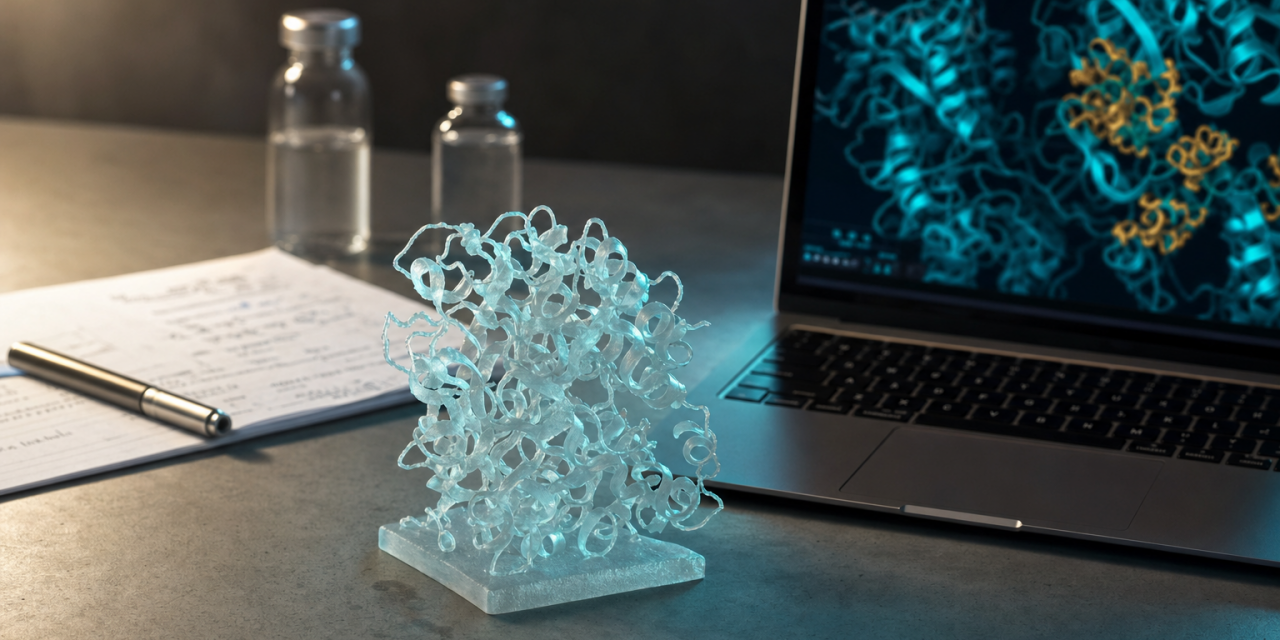
AlphaFold changed expectations in biology by showing that AI could predict protein structures with remarkable accuracy. For drug discovery, that matters because protein shape influences how molecules bind, how signals move through cells and how diseases can be interrupted.
But structure prediction is not the same as discovering a drug. A useful medicine must do much more than fit into a binding pocket. It must have the right potency, selectivity, safety profile, metabolic behavior and delivery characteristics. This is where Isomorphic Labs is trying to move beyond AlphaFold.
The company now highlights the Isomorphic Labs Drug Design Engine as its central platform. Based on public descriptions, the engine combines predictive and generative AI models. Predictive models estimate what is likely to happen in biology or chemistry. Generative models propose new molecular designs that may satisfy specific constraints.
A model that only predicts can rank options, but it depends on humans to generate them. A model that only generates can produce many molecules, but without strong prediction it may flood researchers with unrealistic candidates. The value comes from the loop between proposing, evaluating and improving molecules.
Why AI drug discovery is harder than it looks
AI drug discovery often sounds like a shortcut. Feed in disease biology, get out a medicine. Real discovery is not that clean.
There are several hard problems that Isomorphic Labs and its peers must solve at the same time:
- Target biology: choosing the right protein or pathway is still one of the most important decisions in a program.
- Binding prediction: models need to estimate whether a molecule binds and how strongly it binds.
- Selectivity: a drug should affect the intended target without disrupting too many others.
- Developability: molecules need properties that make them practical to test, manufacture and dose.
- Clinical translation: success in computational models and lab assays does not guarantee success in humans.
This is why the company’s interdisciplinary structure is central to its story. Isomorphic Labs says its team brings together drug discovery experts and machine learning specialists. That mix is not cosmetic. AI researchers may build powerful models, but medicinal chemists, biologists and clinicians understand where those models can mislead.
Partnerships show the industrial direction
Isomorphic Labs is not positioning itself as a pure academic research group. Its partnerships suggest a strategy built around real drug programs and pharmaceutical scale.
The company has announced collaborations with major pharmaceutical groups, including Novartis and Eli Lilly in 2024, followed by a research collaboration with Johnson & Johnson. It has also expanded its presence beyond London, including Lausanne, and announced a United States presence with the appointment of Dr. Ben Wolf as chief medical officer.
These moves matter because drug discovery becomes valuable only when AI systems are tied to experimental validation, clinical strategy and regulatory discipline. Large pharmaceutical companies bring disease area expertise, compound development experience and clinical infrastructure. Isomorphic Labs brings AI systems designed to compress and improve the earlier discovery process.
The company also announced a 600 million dollar external investment round in 2025. For an AI drug discovery company, funding is not just a signal of market confidence. It is also practical fuel. Building models, running experiments and advancing candidates toward clinical testing require significant capital.
The promise and the proof gap
Isomorphic Labs uses ambitious language, including the long term mission to one day solve all disease with the help of AI. Demis Hassabis has said, “I believe there is no more important application for AI than helping to improve human health.” That statement captures why the company attracts attention far beyond biotech circles.
Still, the proof gap is important. Better models can reduce wasted effort, but the ultimate test is whether they produce medicines that are safe and effective in patients. AI can improve the odds, shorten some cycles and reveal design options humans might miss. It cannot remove biology’s uncertainty.
There are also signs that benchmarking remains complex. Public reports around protein ligand prediction have shown that newer AI methods do not automatically dominate every evaluation. In some settings, older methods combined with expert inspection and manual refinement have remained competitive. That does not undermine the broader field, but it does show why careful validation matters.
The strongest version of Isomorphic Labs’ argument is not that AI will replace scientists. It is that AI can change the unit economics of scientific iteration. If a team can test better molecules earlier, avoid weak directions sooner and understand protein interactions more clearly, the whole discovery process can become more focused.
What makes Isomorphic Labs different
Many companies claim to use AI in drug discovery. Isomorphic Labs has three distinguishing advantages.
First, it has direct lineage from DeepMind and AlphaFold, giving it credibility in scientific AI. Second, it is building an integrated platform rather than a single point solution. Third, it is pairing model development with pharmaceutical collaborations that can test whether the technology works in real discovery programs.
That combination does not guarantee success, but it makes the company one of the clearest examples of where the field is heading. The future of AI in drug discovery will likely depend less on flashy model demos and more on whether companies can connect prediction, molecule generation, lab validation and clinical judgment into one disciplined workflow.
The real test ahead
Isomorphic Labs is worth watching because it is taking one of AI’s most celebrated scientific achievements and asking a harder question: can this become medicine? The answer will come from drug candidates that survive the long path from model output to patient benefit.
AI may not make drug discovery simple, but it could make failure more informative. In a field where most ideas fail, learning faster may be the advantage that matters most.