The dawn of a new industrial era
On January 5, 2026, at the Consumer Electronics Show in Las Vegas, Boston Dynamics made history by unveiling the production version of Atlas, their fully electric humanoid robot. This wasn’t just another tech demonstration or prototype showcase. This was the moment when science fiction stepped decisively into reality, marking the beginning of what many are calling the humanoid revolution in industrial automation.
The reveal took place during Hyundai’s global CES media day presentation, where Atlas shared the stage with a troupe of Boston Dynamics’ famous Spot robots performing an energetic dance routine. But while Spot has been charming audiences for years, Atlas represents something fundamentally different: a machine built in our image, designed to work alongside us, and capable of learning from experience.
Robert Playter, CEO of Boston Dynamics, captured the significance of the moment perfectly when he stated: “For more than 30 years, Boston Dynamics has been building some of the world’s most advanced robots. This is the best robot we have ever built. Atlas is going to revolutionize the way industry works, and it marks the first step toward a long-term goal we have dreamed about since we were children, useful robots that can walk into our homes and help make our lives safer, more productive, and more fulfilling.”
From research lab to factory floor
The journey to this production version of Atlas has been decades in the making. Boston Dynamics, founded over 30 years ago, has long been at the forefront of mobile robotics research. The company’s earlier iterations of Atlas were hydraulic-powered machines that could run, jump, and perform impressive acrobatic feats. These demonstrations captured public imagination and went viral on social media, but they were primarily research platforms, not commercial products.
The transformation began when Hyundai Motor Group acquired an 88% stake in Boston Dynamics, providing both the capital and the industrial expertise needed to turn Atlas from a laboratory curiosity into a practical workforce solution. This partnership proved crucial, as it gave Boston Dynamics access to real-world manufacturing environments and the automotive supply chains necessary for mass production.
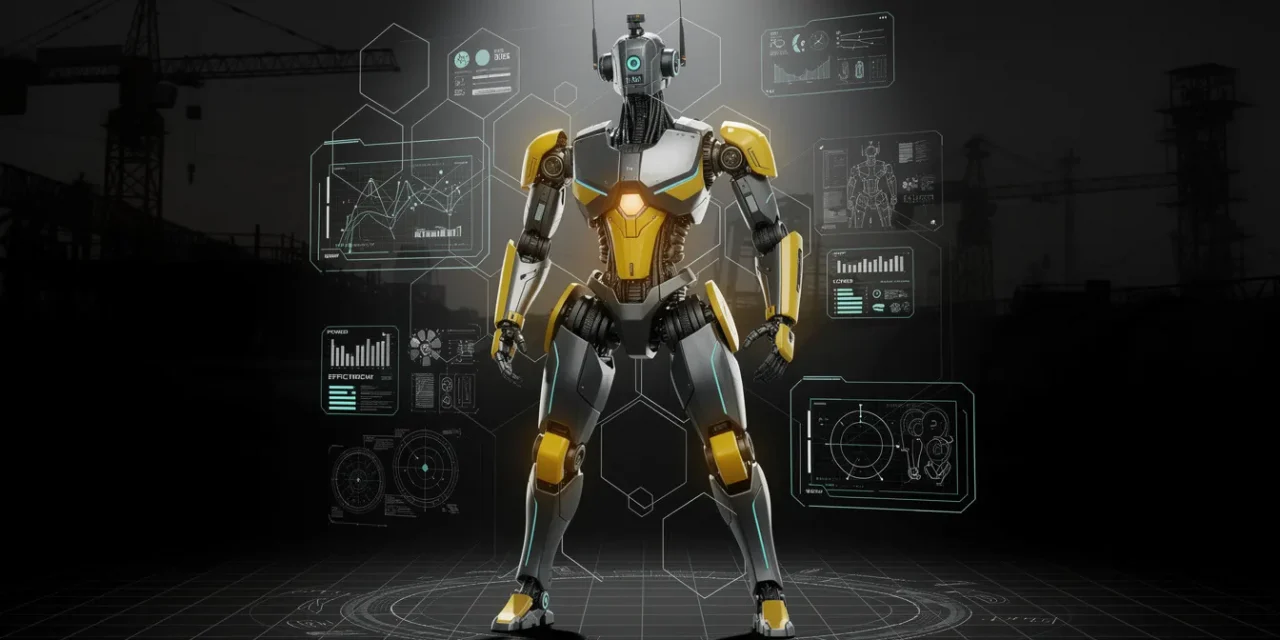
The new Atlas represents a complete reimagining of the platform. Gone is the bulky hydraulic system, replaced by an all-electric design that’s sleeker, more efficient, and significantly more production-friendly. Standing 5’9″ tall and weighing 200 pounds, Atlas now looks less like a mechanical experiment and more like a purpose-built industrial worker.
Zack Jackowski, general manager of Atlas at Boston Dynamics, explained the design philosophy: “This generation of Atlas significantly reduces the amount of unique parts in the robot, and every component has been designed for compatibility with automotive supply chains. With Hyundai Motor Group’s backing, we will achieve the best reliability and economies of scale in the industry.”
The power of artificial intelligence
What truly sets this new Atlas apart isn’t just its physical design, but its brain, powered by Nvidia’s advanced microchips.
Traditional industrial robots follow pre-programmed routines with precision but no flexibility. They repeat the same motions endlessly, unable to adapt when something unexpected occurs. Atlas is different. It learns through experience, developing something approaching common sense about how the physical world works.
Scott Kuindersma, head of robotics research at Boston Dynamics, describes the breakthrough: “A lot of this has to do with how we’re going about programming these robots now, where it’s more about teaching, and demonstrations, and machine learning than manual programming. We found that that’s actually one of the most effective ways to program robots like this.”
Atlas learns in multiple ways. In supervised learning, engineers wearing virtual reality headsets take direct control of the humanoid, guiding its hands and arms move-by-move through each task. These demonstrations generate data that trains Atlas’s AI models to perform tasks autonomously later. The system can also learn by observing human movements captured through motion-tracking suits, translating our natural motions into robotic actions.
Perhaps most impressively, Atlas trains in simulation. Engineers create thousands of digital copies of Atlas, each attempting to master a new skill in a virtual environment. These simulations add challenges like slippery floors, inclines, or stiff joints, allowing the AI to explore different approaches and discover optimal solutions. Once the virtual training is complete, the learned skill is uploaded to every physical Atlas robot. When one Atlas learns something new, they all learn it.
Superhuman capabilities meet human-scale design
Atlas is designed to be an enterprise-grade humanoid robot capable of performing a wide array of industrial tasks, from material handling to order fulfillment. Its specifications read like a wish list of capabilities that industrial managers have dreamed about for decades.
The robot features 56 degrees of freedom with fully rotational joints, giving it a range of motion that actually exceeds human capabilities. Its reach extends to 2.3 meters (7.5 feet), and it can lift up to 50 kilograms (110 pounds) with consistent reliability. Unlike human workers who tire over the course of a shift, Atlas maintains the same pace and precision hour after hour.
The robot is built to withstand harsh industrial environments. It’s extremely water-resistant and can operate in temperature ranges from -20° to 40° Celsius (-4° to 104° Fahrenheit). This robustness means Atlas can work in conditions that would be uncomfortable or even dangerous for human workers.
Safety features are built into every aspect of Atlas’s design. The robot includes human detection and fenceless guarding systems, allowing it to work safely alongside people without requiring physical barriers. It can be integrated into existing workflows using barcode scanners or RFID technology, and connects seamlessly to manufacturing execution systems (MES), warehouse management systems (WMS), and other industrial software through Boston Dynamics’ Orbit platform.
Perhaps most remarkably, Atlas is designed for continuous operation. When its battery runs low, the robot autonomously navigates to a charging station, swaps out its own batteries, and returns to work without human intervention. This self-sufficiency represents a major leap forward in robotic autonomy.
Three modes of operation
Atlas can be controlled in three different ways, depending on the task and the level of autonomy required. In fully autonomous mode, the robot uses its AI brain to perceive its environment, make decisions, and execute tasks without human oversight. This is the ultimate goal for most industrial applications.
For more complex or unpredictable situations, Atlas can be teleoperated, with a human controller guiding its actions remotely. This mode is particularly useful during the training phase or when dealing with unusual circumstances that the AI hasn’t encountered before.
Finally, Atlas can be controlled using a tablet steering interface, providing a middle ground between full autonomy and direct teleoperation. This flexibility ensures that Atlas can be deployed effectively even as its capabilities continue to evolve.
Real-world testing at Hyundai
The first real-world deployment of Atlas is taking place at Hyundai’s new manufacturing facility near Savannah, Georgia. This sprawling auto plant already employs more than 1,000 robots working alongside almost 1,500 human workers, making it an ideal testing ground for humanoid technology.
In a back corner of the parts warehouse, Atlas is learning to sort roof racks for the assembly line. This might seem like a simple task, but it requires a complex combination of perception, decision-making, and physical manipulation. Atlas must identify different types of roof racks, determine the correct sorting sequence, grasp each component securely, and place it in the right location, all while navigating a dynamic warehouse environment.
The competitive landscape
Boston Dynamics isn’t alone in the race to develop commercial humanoid robots. Tesla has announced its own humanoid platform called Optimus. Startups backed by tech giants likek Amazon and Nvidia are developing their own solutions. And perhaps most significantly, Chinese companies like Keenon are proving to be formidable competitors.
Robert Playter acknowledges the competitive threat: “The Chinese government has a mission to win the robotics race. Technically I believe we remain in the lead. But there’s a real threat there that, simply through the scale of investment, we could fall behind.”
Goldman Sachs predicts the market for humanoid robots will reach $38 billion within the decade. With stakes this high, the race is intensifying. Boston Dynamics’ advantage lies in its decades of experience, its partnership with Hyundai, and its proven track record with Spot, which has already demonstrated that Boston Dynamics can successfully commercialize advanced robotics technology.
Addressing the workforce question
The elephant in the room with any discussion of humanoid robots is the impact on human workers. If robots can do human jobs, what happens to the humans currently doing those jobs?
Robert Playter offers a nuanced perspective: “Work does change. The really repetitive, really back-breaking labor is going to end up being done by robots. But these robots are not so autonomous that they don’t need to be managed. They need to be built. They need to be trained. They need to be serviced.”
Hyundai’s massive investment in robotics supports this vision. The company recently announced a $26 billion investment in its U.S. operations, including plans to build a new robotics factory capable of producing 30,000 robots per year.
The road ahead
Production of the new Atlas robots has begun at Boston Dynamics’ Boston headquarters. All Atlas deployments are fully committed for 2026, with fleets scheduled to ship to Hyundai’s Robotics Metaplant Application Center and Google DeepMind in the coming months. The company plans to add additional customers in early 2027.
But even as production ramps up, Boston Dynamics acknowledges that significant challenges remain. Scott Kuindersma points out that most things people do in their daily lives, Atlas still cannot do. Simple tasks like putting on clothes or pouring a cup of coffee and walking around with it remain beyond current capabilities.
However, Kuindersma sees a clear pathway forward: “The thing that’s really exciting now is we see a pathway to get there.” That pathway is paved with AI, machine learning, and the kind of real-world experience that Atlas is now gaining at Hyundai’s facility.