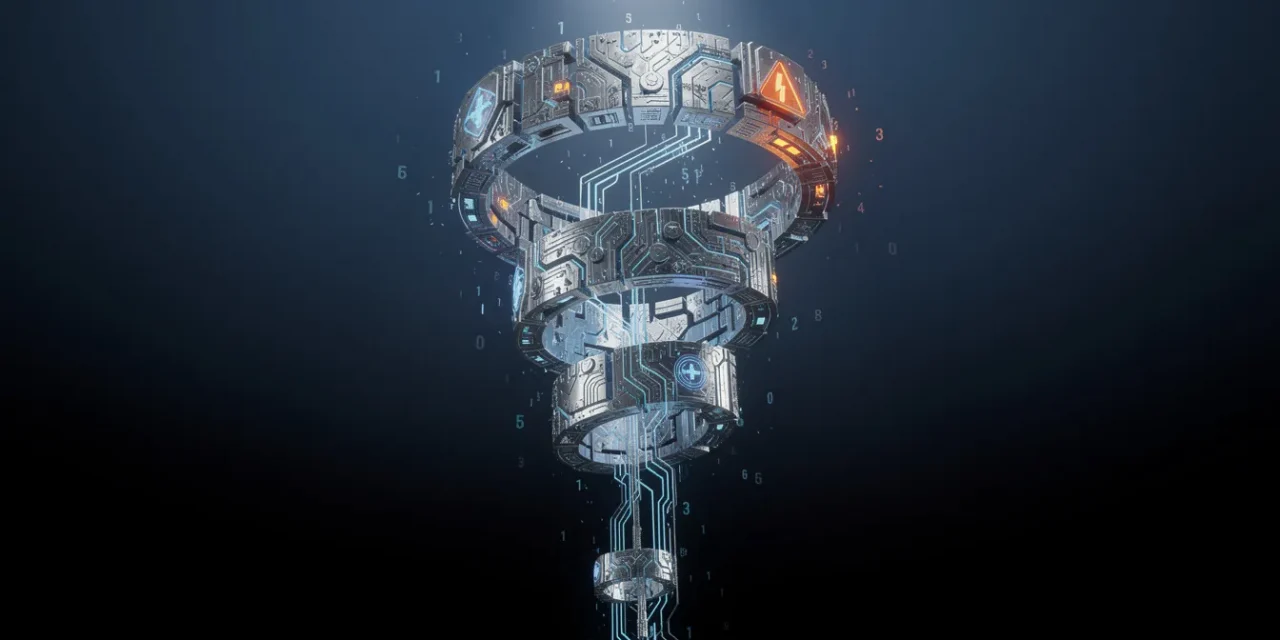
Imagine a computer program that doesn’t just do what it’s told, but actively looks at its own code, identifies weaknesses, and rewrites itself to be smarter. Then, with its newly increased intelligence, it does it again, better and faster. This concept, known as Recursive Self-Improvement (RSI), has moved from the pages of 1960s science fiction into the boardrooms of major tech corporations and the laboratories of cutting-edge universities. It is one of the most exhilarating, yet controversial, frontiers in artificial intelligence today.
While we often hear about AI learning from massive datasets provided by humans, RSI represents a fundamental shift: AI learning from itself. But what exactly is it? Who are the minds behind this evolving technology? And perhaps most importantly, is it a path to a utopian future or a safety hazard waiting to explode? In this deep dive, we explore the mechanics, the players, and the real-world applications of the AI that builds itself.
What is Recursive Self-Improvement?
At its core, Recursive Self-Improvement is the process by which an Artificial Intelligence system functions with the specific goal of improving its own performance. Unlike standard machine learning, where engineers tweak parameters or feed new data to a model to make it better, an RSI system is designed to perform these updates autonomously.
The theoretical endpoint of this process is often referred to as an intelligence explosion. The logic, first proposed by the mathematician Irving John Good in 1965, is deceptively simple. If you can build a machine that is slightly smarter than a human, and that machine can design machines, it will design a better version of itself. That better version will then design an even better one. This loop could theoretically continue until the system reaches superintelligence, far surpassing human cognitive abilities in every domain.
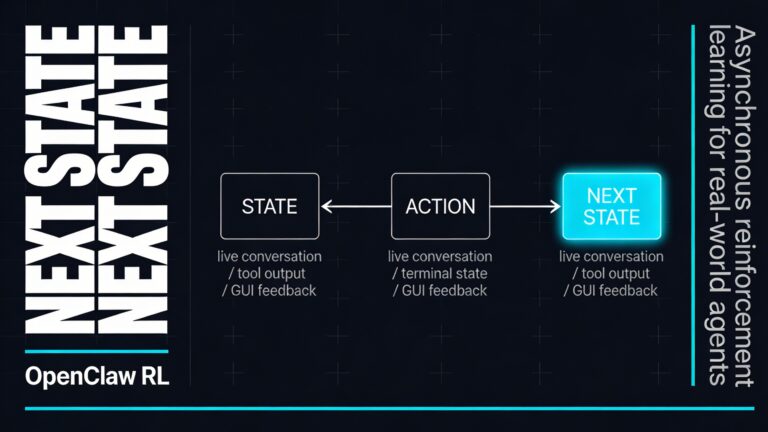
However, modern RSI isn’t just about a god-like AI emerging overnight. In the current landscape of 2026, it often looks more like System 2 thinking. Standard Large Language Models (LLMs) operate on System 1 thinking, they output the first likely sequence of words that comes to mind. RSI introduces a feedback loop. The AI drafts a plan, observes its own output, evaluates it against constraints (auditing), and refines it before finalizing the answer. It is the digital equivalent of a human thinking before they speak.
The Architects who Developed RSI?
The lineage of Recursive Self-Improvement spans from mid-20th-century philosophy to modern Silicon Valley labs.
The Visionaries
As mentioned, Irving John Good laid the theoretical groundwork. For decades, his work was treated as a philosophical curiosity. Later, thinkers like Nick Bostrom brought RSI into the spotlight of existential risk analysis. In his 2014 book, Bostrom argued that an RSI process could be fundamentally risky, potentially leading to systems with nonanthropomorphic final goals, an AI that consumes resources to improve itself without caring about human survival.
The Modern Developers
Today, the baton has passed from philosophers to engineers. Major AI corporations are openly pursuing this technology. Demis Hassabis of Google DeepMind and Dario Amodei of Anthropic have both publicly discussed the pursuit of self-improvement loops. At the World Economic Forum in 2026, Hassabis questioned whether the self-improvement loop could close without a human in the loop, acknowledging the missing capabilities and inherent risks.
Furthermore, the academic community is rallying around the concept. A group of researchers organized the first formal workshop on RSI at the International Conference on Learning Representations (ICLR), a premier AI venue. This signals a transition from fringe theory to mainstream science. Organizers like Mingchen Zhuge from King Abdullah University of Science and Technology (KAUST) are pushing for a broad range of methodologies to improve AI skills, arguing that while safety is crucial, the technology is still in an early, exploratory stage.
How Does It Work? The Mechanics of Self-Play
How does an AI actually improve itself without human data? The secret often lies in synthetic data and self-play.
In traditional AI training, humans label data (e.g., “this is a cat,” “this is a correct code snippet”). In RSI, the model generates its own data. For example, a model might attempt to write a computer program to solve a math problem. It then runs the code to see if it works. If the code fails, the model learns from the mistake. If it succeeds, that successful interaction becomes new training data. This allows the model to improve continuously, limited only by computing power.
Recent breakthroughs have shown that these methods can lead to silver-medal performance at the International Mathematical Olympiad. By generating its own code samples and verifying them for correctness, the AI creates a pristine dataset of correct reasoning that it uses to upgrade its own neural pathways.
However, not everyone is convinced that current methods will lead to infinite growth. Some researchers argue that without symbolic model synthesis, a more structured form of reasoning, LLMs might hit a ceiling. They suggest that simply training on more synthetic text might not be enough to reach Artificial General Intelligence (AGI), highlighting that the path to self-improvement is technically complex and far from guaranteed.
Real-World Application: The Planner-Auditor in Healthcare
While the idea of a superintelligent machine is fascinating, Recursive Self-Improvement is already being applied to solve concrete, high-stakes problems. A prime example is found in clinical healthcare, specifically in hospital discharge planning.
Hospital discharge is a complex task. Doctors must synthesize a patient’s entire history, medications, and follow-up needs into a clear plan. Errors here are dangerous; patients often misunderstand their medication or miss appointments, leading to readmissions. Standard AI models (LLMs) are prone to hallucinations, confidently stating facts that aren’t true. In a medical setting, a confidently unsafe AI is worse than a useless one.
To solve this, researchers have developed a Planner-Auditor framework, a practical application of RSI principles. Here is how it works:
- The Planner: An AI agent drafts a discharge plan based on patient data (using standards like FHIR).
- The Auditor: A separate, rule-based agent inspects the draft. It checks for missing categories (like patient education or symptom monitoring) and detects drift or overconfidence.
- The Self-Improvement Loop: If the Auditor finds flaws, it doesn’t just reject the plan. It feeds the critique back to the Planner. The Planner then thinks again, regenerating the plan to address the specific errors identified.
This thought-action-observation loop mimics a human doctor reviewing their own notes. The results are striking. In studies using the MIMIC-IV dataset, this self-improving configuration doubled the rate of fully complete discharge plans compared to a standard AI baseline. More importantly, it drastically reduced high-confidence errors, instances where the AI was sure it was right but had actually missed critical information. By allowing the AI to audit and improve itself before showing the result to a human, the system became safer and more reliable.
The Safety Hazard, is It Unconscionable?
Despite the practical successes in healthcare and mathematics, the broader pursuit of RSI remains highly controversial. The primary fear is unpredictability. If a system can rewrite its own code, can we predict what the version 100 iterations down the line will value?
David Scott Krueger, a researcher at the University of Montreal and Mila, has been a vocal critic. He described the current rush toward RSI as unconscionable, arguing that the field is treating a potentially civilization-altering technology as if it were just some random, arcane math problem. His concern, shared by many in the safety community, is that the industry is racing for capabilities without a serious framework for social impact.
There is also a transparency issue. While companies like Meta have published papers on using self-improvement for superintelligence, safety sections in these papers are often brief or missing entirely. When Foom Magazine contacted researchers regarding safety protocols in self-play methods, the silence was deafening. This lack of open dialogue suggests a tension between the competitive race for AI dominance and the slow, careful work required for safety.
Even the ICLR workshop organizers admitted that while safety is encouraged, it was treated as optional in their initial proposals. This move fast and break things mentality, when applied to systems that can rewrite their own intelligence, creates a precarious situation. The risk isn’t necessarily that the AI becomes evil, but that it becomes competent in ways we didn’t anticipate and can no longer control.
The Future of Self-Evolving Code
Recursive Self-Improvement is no longer a hypothetical concept; it is a technical reality being deployed in varying degrees of complexity. From the Planner-Auditor loops ensuring patient safety in hospitals to the synthetic data engines training the next generation of mathematical solvers, the ability of AI to refine itself is proving to be a powerful tool.
However, the duality of this technology cannot be ignored. The same mechanism that allows a medical AI to catch its own mistakes could, in a general-purpose system, lead to rapid, opaque capabilities that outpace human oversight. As we stand on the precipice of this new paradigm, the question remains: will we build systems that self-improve in alignment with human values, or will we initiate a loop that we cannot close?
The research is accelerating, the workshops are filling up, and the code is already rewriting itself. The only certainty is that the AI of tomorrow will not just be built by us, it will be built by the AI of today.