Qwen 3.6-Plus is Alibaba’s latest flagship large language model, positioned around a clear theme: agentic AI coding. In practical terms, that means the model is built not only to answer prompts, but to work through programming tasks in a more autonomous way. It can plan, write, test, revise, and continue until a task is completed. That shift matters because the next phase of enterprise AI is less about chat and more about execution inside real workflows.
For anyone following the fast pace of the AI model market, Qwen 3.6-Plus stands out for four reasons. It combines strong coding performance with multimodal input, supports a very large context window of 1 million tokens by default, aims at business workflows rather than isolated benchmarks, and is being positioned as compatible with widely used developer ecosystems. Together, those elements make it more than just another model release.
Why Qwen 3.6-Plus matters now
The timing is important. Competition in foundation models has shifted from simple language generation toward systems that can operate as AI agents. Vendors are no longer judged only on writing quality or benchmark scores. They are being evaluated on whether their models can handle repository level coding, tool use, document analysis, multimodal inputs, and step by step problem solving in production environments.
Qwen 3.6-Plus enters this race with a direct claim to stronger practical engineering performance. Reports around the launch highlight improvements in mainstream code repair, complex terminal operations, automated tasks, and multimodal reasoning. This is the kind of capability set that resonates with software teams, digital product groups, and enterprises looking to reduce friction in development and operations.
That positioning also reflects a broader industry trend. The most relevant AI models in 2026 are increasingly those that can act as graders, reviewers, orchestrators, and autonomous helpers across multiple tools. In that context, Qwen 3.6-Plus is less a chatbot update and more a platform move.
What Qwen 3.6-Plus actually brings
1. Stronger agentic coding
The headline feature is improved agentic coding. Qwen 3.6-Plus is described as better at breaking down complex programming tasks, writing code iteratively, testing outputs, troubleshooting failures, and refining solutions until the objective is met. That matters because modern software work rarely consists of generating one isolated code snippet. It involves handling dependencies, debugging edge cases, interpreting existing codebases, and moving between planning and execution.
Claims around benchmark performance suggest it is competitive with leading proprietary coding models. One cited figure places the model at 78.8 on SWE bench Verified, which is often used to evaluate how well models can solve real software engineering tasks drawn from actual repositories. Even when benchmark comparisons should be treated with caution, that score signals serious intent. The message is clear: Qwen wants to be considered in the same category as the top coding models, not as a lower tier alternative.
2. A 1M token context window
One of the most operationally relevant features is the 1 million token context window. Context size is not just a specification for marketing slides. It determines how much information a model can work with at once. For enterprise and software tasks, this can mean large code repositories, long technical documentation, issue histories, system logs, legal or compliance materials, and multimodal project assets in one working session.
A large context window creates several practical advantages:
- Repository level reasoning across multiple files instead of isolated code snippets
- Long horizon debugging where the model can trace logic across large systems
- Document heavy workflows such as requirements analysis, policy alignment, and technical onboarding
- Reduced prompt fragmentation, which lowers the need to manually split context into smaller chunks
Of course, long context is only useful when retrieval quality, attention efficiency, and reasoning remain strong across that larger input range. Still, the 1M default window shows that Qwen 3.6-Plus is being built for large scale operational tasks rather than narrow demos.
3. Multimodal reasoning and visual coding
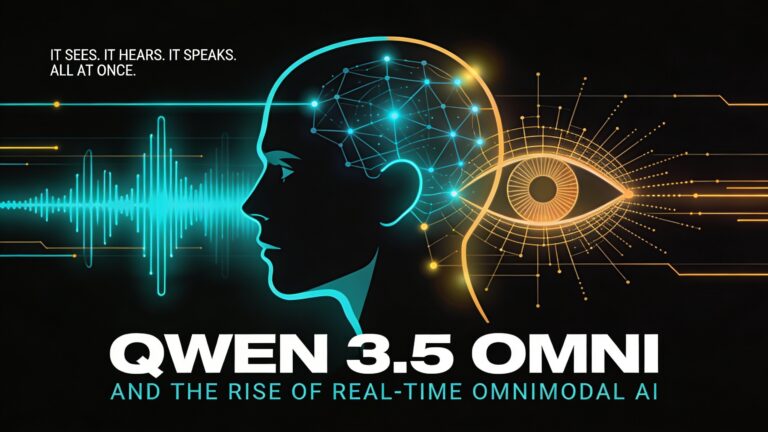
Qwen 3.6-Plus is also presented as a native multimodal model. That is significant because software and business workflows are not text only. Teams work with screenshots, interface mockups, design files, documents, diagrams, spreadsheets, dashboards, and photos from physical environments.
The model’s multimodal improvements reportedly include reasoning over documents, visual analysis of physical world scenes, and visual coding. In practice, that can mean generating front end code from screenshots or design drafts, extracting structured insight from dense documents, or linking visual inputs to engineering tasks. This is where multimodal capability becomes a workflow feature rather than a novelty.
For enterprises, this is especially relevant in areas such as:
- UI and front end prototyping
- Document understanding in legal, finance, and operations
- Field support workflows where images and text need to be interpreted together
- Automation of repetitive tasks that depend on mixed input types
Architecture and efficiency signals
Available technical descriptions indicate that Qwen 3.6-Plus builds on a hybrid architecture combining linear attention with sparse mixture of experts routing. Without going too deep into implementation details, that combination is meant to support scale and inference efficiency while maintaining strong performance on harder tasks.
Linear attention methods can help when processing very long inputs because they reduce some of the computational burden associated with standard attention mechanisms. Sparse mixture of experts routing, meanwhile, activates only relevant sub networks for a given task instead of using the full model uniformly each time. The practical implication is better performance efficiency, especially in large scale deployments where latency and cost matter as much as quality.
That architectural direction fits a wider trend across the model ecosystem. Vendors are trying to move beyond brute force scaling alone. The challenge now is to deliver stronger reasoning and tool use while keeping inference economically viable. If Qwen 3.6-Plus can maintain quality with this architecture in production settings, that could be one of its more important strengths.
Built for business workflows, not just benchmark wins
One of the more interesting aspects of the launch is the emphasis on genuine business scenarios. That phrase is easy to overlook, but it points to a strategic shift in AI product design. Enterprises do not need models that only shine on isolated tasks. They need systems that support end to end workflow operations.
Qwen’s messaging suggests that the future of multimodal AI lies in holistic workflow support. That means connecting reasoning, coding, document understanding, task execution, and visual interpretation in the same operational loop. In other words, the target is not a single answer. The target is progress on a business process.
This matters in sectors where AI adoption is moving from pilots to production. Decision makers increasingly care about questions like these:
- Can the model support internal engineering teams?
- Can it operate reliably across toolchains?
- Can it process documents, interfaces, and code together?
- Can it fit into existing development environments and agent frameworks?
Qwen 3.6-Plus appears designed to answer yes to those questions, at least in positioning and feature scope.
Compatibility and ecosystem strategy
Model quality alone does not determine adoption. Ecosystem compatibility matters just as much. Qwen 3.6-Plus is reported to support the Anthropic API protocol for use with Claude Code and to be compatible with OpenClaw. That kind of interoperability reduces friction for developers who already use established agent tooling and coding environments.
This is a smart move. In the current AI market, switching costs can be high. Teams have already invested in prompts, wrappers, evaluation pipelines, observability tooling, and security reviews around specific APIs. If a new model can plug into familiar workflows with minimal rework, it has a better chance of being tested and adopted.
There is also a broader strategic dimension here. Interoperability helps a model vendor compete on capability and economics rather than on lock in alone. In a market where open source, open weight, and API compatible approaches are gaining momentum, that is increasingly important.
How Qwen 3.6-Plus compares in the current model race
Qwen 3.6-Plus enters a market shaped by intense competition between proprietary frontier models and a growing wave of open and semi open alternatives. It is being compared with top Anthropic models in coding related performance, while also arriving in an environment where developers pay close attention to open ecosystems, pricing flexibility, and deployment choice.
That creates a distinct competitive space for Qwen. Its appeal is not only about matching a headline benchmark. It is about combining four priorities in one package:
- Advanced coding performance
- Large context support
- Multimodal capability
- Workflow oriented enterprise positioning
Not every model balances those elements equally. Some excel in pure reasoning. Others lead in coding. Others are easier to integrate or more cost effective. Qwen 3.6-Plus is trying to present itself as an all arounder with particular strength in practical engineering.
Why agentic coding is becoming the real battleground
The phrase agentic coding can sound like another layer of AI branding, but it points to a real shift in software development. Traditional code assistants mostly generate or complete snippets. Agentic coding systems operate with more autonomy. They can inspect repositories, propose implementation plans, modify multiple files, run tests, interpret failures, and continue iterating.
This changes the value proposition of AI in engineering teams. The question is no longer whether a model can write a function. The question is whether it can contribute meaningfully to larger software tasks with limited supervision.
That is why features such as multimodal input and long context matter so much. Real world coding work is embedded in issue trackers, user stories, screenshots, architecture notes, shell output, and legacy code. A model that can move across those materials has a much better chance of becoming useful inside an actual engineering process.
Qwen 3.6-Plus is clearly being shaped for this reality. If it performs consistently on repository level tasks and complex tool use, it could strengthen Alibaba’s position in the AI infrastructure market and expand Qwen’s relevance well beyond conversational AI.
What to watch next
The most important next step for Qwen 3.6-Plus is not the launch narrative. It is how the model performs in independent testing and real deployments. Several questions will determine its staying power:
- Reliability under long context workloads
- Consistency in multi step coding tasks
- Quality of multimodal reasoning in business scenarios
- Latency and inference economics at scale
- Developer adoption through interoperable tooling
Another factor is market momentum. Alibaba has released several Qwen models in quick succession, including omni modal variants before this flagship launch. That pace suggests urgency and ambition. It also reflects the reality that foundation model leadership is now fluid. Vendors cannot rely on one major release to define the year. They need a cadence of improvements, ecosystem support, and developer trust.
The bigger picture for enterprise AI
Qwen 3.6-Plus is best understood as part of a larger movement in enterprise AI. The market is moving from single prompt interactions toward workflow capable models that can act across tools, data types, and long running tasks. In that world, the winning models are likely to be those that combine reasoning, multimodality, coding strength, integration flexibility, and cost awareness.
Alibaba’s latest release aligns with that direction. It signals that the competitive edge is shifting toward models that can support real engineering and operational work, not only produce polished text. That does not guarantee leadership, but it does place Qwen 3.6-Plus in one of the most strategically important segments of the AI market.