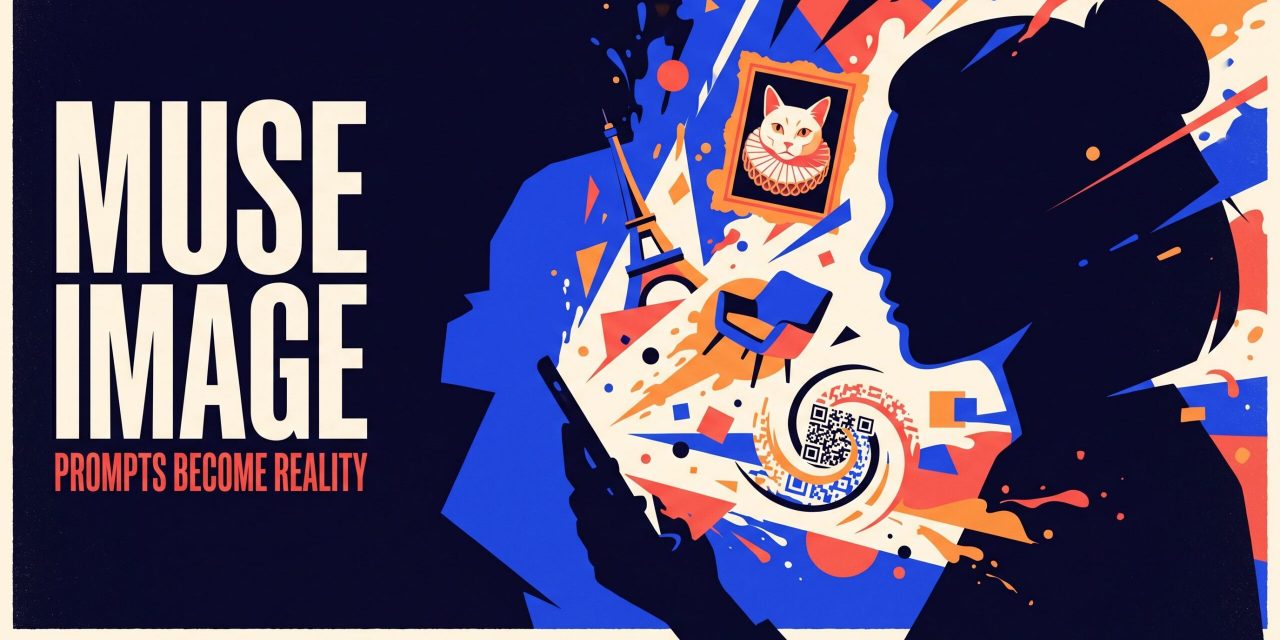
Meta just put a new image generation model directly into the apps you already use. Muse Image is the first image model from Meta Superintelligence Labs, and it lives inside Meta AI, Instagram Stories, and chats on WhatsApp. Instead of jumping between a separate creative tool and your social feed, you describe what you want in plain language and get a high-quality visual you can post, send, or download on the spot.
This is a bigger shift than a new filter pack. Meta is stitching generative AI into the exact places where people share photos, plan events, redesign rooms, and reply to friends. The result is a creative partner that already knows the context of your conversation and the accounts you follow.
What Muse Image actually does
Muse Image generates and edits pictures from text prompts, but the interesting part is how it interprets those prompts. The model plans a layout, pulls in real-time web context through Muse Spark, and blends multiple visual references before it renders anything. That reasoning step is why it handles compound requests without falling apart.
A few examples of what you can ask for:
- Place yourself in front of a historical landmark you have never visited
- Erase a photobomber from the background of an existing photo
- Generate a working QR code styled to match a poster
- Produce a how-to guide or infographic where the text stays legible
- Drop your pet into a famous painting or merge a selfie with a vacation shot
Legible text inside images has been one of the harder problems for generative models. Meta specifically highlights that Muse Image renders typography cleanly, which opens the door to infographics, menus, event posters, and step-by-step visuals that used to require design software.
Built into the apps, not bolted on
Muse Image powers more than 30 new AI-driven effects for Instagram Stories. On WhatsApp, you can generate images inside a direct chat with Meta AI, starting in a limited set of countries with wider availability planned. Facebook and Messenger are next on the roadmap, along with deeper hooks into Instagram and WhatsApp.
The integration matters more than the feature list. Most image generators live on a separate website or app, so the friction of moving files around slows people down. Meta is removing that step by putting generation where sharing already happens.
Presets for people who freeze at the blank prompt
Meta AI now surfaces a panel of suggested prompts. One tap restores an old family photo, previews a trending hairstyle on your face, or turns you into a claymation character or a 16-bit game hero. Once you land on something you like, sharing it invites friends to run the same preset on their own photos, which is clearly designed to spread these effects the way filters used to.
Redesign your room and shop the result
Snap a photo of a room and ask Meta AI to redesign it. The interesting twist is that suggested products can be pulled from the open web or Facebook Marketplace, so the makeover is not just aspirational. You can ask for a specific style or let Meta AI lean on whatever is trending, then look at what your actual space would become.
Editing that feels like a conversation
Once an image exists, you refine it by talking to it. Tap the markup icon, circle a spot, sketch a change, or annotate what you want fixed. Because Meta AI holds the full context of the conversation, follow-ups like “make the jacket denim” or “swap the sky for sunset” build on the previous version instead of starting over.
You can also @-mention Instagram accounts inside the Meta AI app to bring specific profiles into an image. That is how you might design a custom event invitation, mock up a collaborative concept, or generate a graphic featuring a friend. Public photos from the tagged account feed the visual, and every account has a setting to opt out of being used this way.
Where Muse Image sits in the AI race
This is the second release from Meta Superintelligence Labs, the team led by Alexandr Wang that Meta assembled to close the gap with OpenAI and Google. The first release was Muse Spark, a text and reasoning model that replaced the older Llama family earlier in the year. Muse Image, previously codenamed Mango, arrives on its heels.
Meta is open about how the model compares. Internal tests put Muse Image behind OpenAI’s GPT Image 2 on complex editing tasks, but ahead of Google’s Nano Banana 2 when editing single and multiple images. That is a nuanced position: not the outright leader, but competitive in the workflows Meta cares about most.
It also ends Meta’s reliance on third-party models like Midjourney and Black Forest Labs for image generation inside its apps. Owning the model gives Meta control over cost, latency, safety tooling, and the roadmap.
The business logic behind the launch
Two revenue streams are lining up behind Muse Image. The consumer side runs on a freemium model. Everyday creation is free through the Meta AI app, website, WhatsApp, and Instagram Stories, with usage caps. Heavy users who want higher volumes or advanced editing move to a paid subscription plan. Hit the free limit and you either subscribe or wait for the counter to reset, a familiar pattern from other generative tools.
The advertising side is where the scale really shows up. Muse Image is being wired into Advantage+ creative, Meta’s automated toolkit for brands. In the coming weeks, advertisers and agencies will be able to generate on-brand image variations directly inside their campaign flow. For a business running dozens of ad creatives a week, cutting the manual iteration cycle is a concrete efficiency gain, and for Meta it is a way to lift ad spend from the millions of businesses already on its platforms.
What is coming next
Images are the opening move. Meta has already previewed Muse Video, an in-development video generation model that the company describes as competitive on prompt adherence, visual fidelity, and temporal consistency. The rollout of Muse Image itself will be phased, with more countries and more surfaces added throughout the year.
Why this launch is worth paying attention to
The interesting question is not whether Muse Image beats every rival on every benchmark. It is what happens when a capable image model lives inside the exact chat threads and story tools that billions of people already open every day. Generative AI stops being a destination and becomes a default action, the same way filters and stickers did a decade ago. That change in behavior, more than any single feature, is what makes Muse Image worth watching.